Cabbagetown is Atlanta's smallest neighborhood — and arguably its most distinctive. Tucked between Reynoldstown, Grant Park, and the old rail lines near Boulevard, this former mill village packs more character per square foot than anywhere else in the city. It's a place where houses are painted in every color of the rainbow, where the walls are covered in world-class street art, and where neighbors still know each other's names.
If you've ever driven down Boulevard and caught a glimpse of tiny, colorful cottages pressed up against each other on impossibly narrow streets, you've seen Cabbagetown. What you probably didn't see from the car is what makes it special: the sense of community, the art, the history, and the quiet pride that residents take in one of Atlanta's most unusual places to live.
Where Is Cabbagetown?
Cabbagetown sits on Atlanta's east side, just south of the Old Fourth Ward and Reynoldstown, and north of Grant Park. The neighborhood is remarkably compact — roughly eight blocks long and a few blocks wide — bordered by Boulevard to the west, the CSX rail line to the north, Ginn Park and the cemetery to the east, and the Grant Park neighborhood to the south.
Despite its small footprint, Cabbagetown's location is surprisingly central. You're a short walk from the BeltLine Eastside Trail, minutes from Ponce City Market, and close to some of the best neighborhoods in the city — Reynoldstown, Old Fourth Ward, Inman Park, Grant Park, and Kirkwood are all nearby. The neighborhood straddles the 30312 and 30316 zip codes.
What Makes Cabbagetown Special?
Cabbagetown isn't like the rest of Atlanta. Here's what sets it apart:
The Mill Village History
Cabbagetown was founded in the 1880s as a company town for workers of the Fulton Bag and Cotton Mill. Jacob Elsas, a German immigrant and industrialist, built the mill and the surrounding village to house his workforce. For nearly a century, this was a self-contained working-class community — homes, churches, schools, and a general store all revolving around the mill. That history is baked into the neighborhood's DNA.
When the mill closed in 1977, the neighborhood faced serious decline. But rather than disappearing, Cabbagetown reinvented itself — first through an influx of artists in the 1980s, then through the organic development of the bohemian, creative community it is today. You can still see the old mill building on the north end of the neighborhood, now converted into loft apartments.
The Shotgun Houses
Cabbagetown has one of the finest collections of shotgun houses in the Southeast. These narrow, one-story homes — typically 12 to 15 feet wide — were built for mill workers and their families in the late 1800s and early 1900s. Rooms are arranged one behind the other without hallways, a design that was practical, affordable, and rooted in Southern building traditions.
What makes Cabbagetown's shotgun houses special is their preservation and their color. Many have been restored and painted in vivid hues — teal, coral, sunny yellow, deep purple — creating a streetscape that feels more like New Orleans or Key West than Atlanta. The neighborhood was listed on the National Register of Historic Places in 1976, and that designation helped protect the housing stock from demolition.
The Street Art
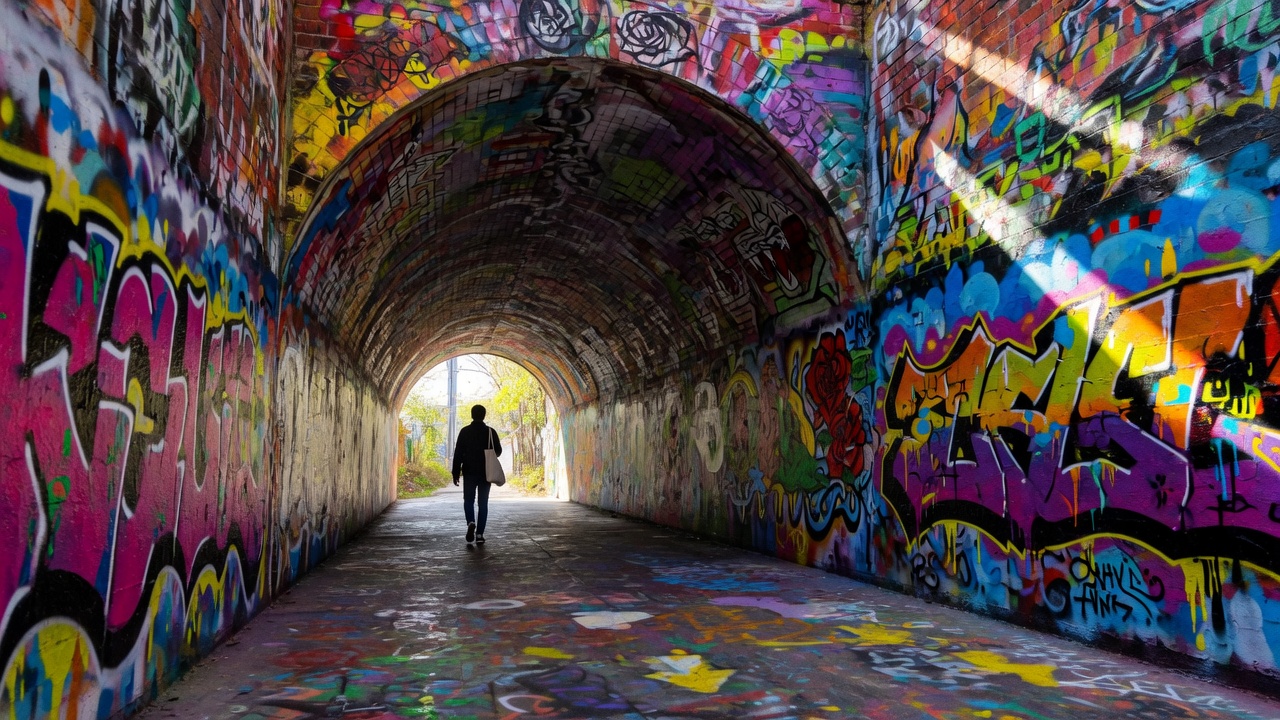
Cabbagetown is ground zero for Atlanta's street art scene. The most famous canvas is the Krog Street Tunnel — a pedestrian underpass connecting Cabbagetown to Inman Park that is covered floor to ceiling in graffiti, murals, and street art. The tunnel's artwork changes constantly, with new pieces layered over old ones in an ever-evolving gallery that's free and open 24/7.
But the art extends well beyond the tunnel. Wylie Street, the northern edge of the neighborhood, features a series of large-scale murals by local and international artists. Residential streets have smaller pieces — painted doors, mosaic gardens, welded sculptures in front yards. The art isn't curated or sanctioned; it's organic, and that's what makes it feel alive.
The BeltLine Connection
Cabbagetown sits just south of the Atlanta BeltLine Eastside Trail, with access points that connect the neighborhood to the broader trail system. Walk north and you're on the trail within minutes, with easy access to Old Fourth Ward and Ponce City Market. Head south and you can explore the Grant Park neighborhood and the developing southside trail corridor.
The BeltLine has been important for Cabbagetown, but the neighborhood has managed to absorb the trail's foot traffic without losing its residential character. Because the trail runs along the neighborhood's northern border rather than through its center, the quiet, narrow streets remain largely untouched by the commotion.
Carroll Street: The Heart of the Neighborhood
Carroll Street is Cabbagetown's main drag — a narrow, tree-lined block that serves as the neighborhood's social and commercial center. It's home to a handful of beloved local spots:
Carroll Street Cafe is the anchor. This French-inspired cafe has been serving coffee, pastries, and light meals for decades, with a sidewalk patio that's one of the best people-watching spots in Atlanta. It's the kind of place where you'll run into three neighbors before your latte arrives.
Little's Food Store is a Cabbagetown institution — a tiny corner market that has served the neighborhood since the 1920s. It's been updated with craft beer and sandwiches, but the old-school general store feel remains. Little's is where you grab a six-pack before sitting on your porch, and where visitors get their first taste of Cabbagetown's character.
The rest of Carroll Street is residential, with houses pressing close to the sidewalk, front porches facing the street, and the kind of walkable, human-scaled streetscape that urban planners dream about. There are no chain stores, no parking garages, no neon signs. Just a few blocks of historic buildings, mature trees, and neighbors who wave when you walk by.
The Tight-Knit Community
Walk through Cabbagetown on any given day and you'll quickly understand that this is a neighborhood where people actually know each other. It's small enough that faces become familiar, and the community culture is deeply rooted. Residents look out for one another, organize around shared interests, and take genuine pride in their neighborhood's quirkiness.
The Cabbagetown Neighborhood Improvement Association (CNIA) is active and engaged, organizing events, advocating for the neighborhood, and maintaining the community's identity. The annual Cabbagetown Festival (also known as the Chomp and Stomp) is the neighborhood's signature event — a celebration of chili, music, and community that draws visitors from across Atlanta while keeping its local, grassroots feel.
There's a small-town quality here that's rare in a major city. Neighbors borrow cups of sugar. Front porches are actually used. Strangers become friends over shared benches on Carroll Street. For people tired of the anonymity of larger intown neighborhoods, Cabbagetown offers something different: a place where you're not just an address, you're a neighbor.
Housing Styles: What You'll Find
Cabbagetown's housing stock is distinctive and limited — the neighborhood is small, and there aren't many homes available at any given time. Here's what exists:
Shotgun Houses
The backbone of Cabbagetown's architecture. These 1-2 bedroom homes are typically 800 to 1,200 square feet, built on narrow lots with minimal setbacks from the street. Many have been renovated with updated kitchens and bathrooms while preserving original details like wood floors, beadboard walls, and front porches. Restored shotgun houses in Cabbagetown typically sell in the $350,000–$500,000 range.
Bungalows and Cottages
Cabbagetown also has a collection of early 20th-century bungalows and cottage-style homes. These are slightly larger than the shotguns — typically 2-3 bedrooms, 1,000 to 1,500 square feet — with front porches, gabled roofs, and the Craftsman details common to Atlanta's older neighborhoods. Renovated bungalows can range from $400,000 to $700,000+.
Fulton Bag and Cotton Mill Lofts
The old mill building at the north end of the neighborhood has been converted into loft apartments and condominiums. These units offer industrial character — exposed brick, high ceilings, large windows — at a range of price points. Lofts are popular with young professionals and artists who want the Cabbagetown lifestyle without the maintenance of a historic house.
Modern Infill
Some new construction has appeared in and around Cabbagetown, typically in the form of modern townhomes or single-family homes on infill lots. These are less common than in neighboring Reynoldstown or Old Fourth Ward, partly because of the neighborhood's historic protections and partly because of its small footprint. New builds near Cabbagetown typically start around $500,000.
What Does Cabbagetown Cost?
Cabbagetown's pricing reflects its desirability, its limited inventory, and its historic character. As of 2025–2026:
Purchase prices range from approximately $343,000 for small lofts and studios to over $1.38 million for fully renovated properties. The median home sale price is roughly in the $450,000–$550,000 range, depending on size, condition, and location within the neighborhood.
Rental rates typically range from $1,650/month for studios to $2,200/month for two-bedroom units, though some larger or renovated units command higher rents.
For buyers, the key thing to understand about Cabbagetown is that inventory is extremely limited. Homes don't come up often — the neighborhood is small, residents tend to stay, and when something does list, it moves quickly. If you're serious about buying in Cabbagetown, patience and a responsive agent are essential.
Schools & Family Life
Cabbagetown is served by Atlanta Public Schools. Nearby school options include Parkside Elementary, Wesley International Academy, and Maynard Holbrook Jackson High School. Many families also consider private and charter school options in the broader intown area.
For families, Cabbagetown's appeal is its walkability, its sense of community, and its proximity to Grant Park and its zoo. The neighborhood is small and residential, with relatively low traffic on most streets. Kids ride bikes on Carroll Street. Dogs are walked daily. It's a neighborhood that works for families — as long as you're comfortable with smaller homes and limited closet space.
What's Nearby
One of Cabbagetown's biggest advantages is what's around it:
Reynoldstown shares the northern border and offers additional dining options, Lang Carson Park, and BeltLine access. Grant Park to the south provides Atlanta's oldest city park and the zoo. Inman Park and the BeltLine Eastside Trail are a short walk north. Old Fourth Ward and Ponce City Market are a five-minute bike ride.
The neighborhood is also close to the Edgewood corridor, East Atlanta Village, and Decatur — each with its own restaurants, bars, and shops. Living in Cabbagetown means you're surrounded by Atlanta's best neighborhoods, even if the neighborhood itself is small.
What's New in Cabbagetown
Cabbagetown's character doesn't change much, and that's the point. But a few things are worth knowing if you're visiting or house-hunting this fall. The neighborhood's two anchors, Carroll Street Cafe and Little's Food Store, are both open and thriving. Just north in Reynoldstown, Casa Coya, a Peruvian steakhouse, opened at Madison Yards in late 2025 and has become a popular east side dinner spot. To the south, the Grant Park side of Memorial Drive keeps adding new spots, including a planned Kinship Butcher & Sundry and a board game cafe at the Beacon.
And if you're here in early December, don't miss Chomp and Stomp on December 5–6, 2026. It's the neighborhood's chili cook-off, music festival, and community celebration all in one.
Tips for Getting to Know Cabbagetown
Walk through, not just past. Cabbagetown is so small that you might drive through it without realizing what you're seeing. Park on Boulevard or Ginn Avenue and walk the interior streets — Carroll, Wylie, Pearl, Rosa — to get a real feel for the neighborhood.
Visit on a weekend morning. Grab coffee and a pastry at Carroll Street Cafe, sit on the patio, and watch the neighborhood wake up. It's the best way to understand Cabbagetown's community feel.
Walk the Krog Street Tunnel. The tunnel's art changes constantly, so even if you've been before, it's worth another visit. Walk through to Inman Park and come back — it's one of Atlanta's great urban walks.
Explore Wylie Street. The murals along Wylie Street are some of the best in Atlanta. Take your time, read the plaques if they exist, and appreciate the art that makes this neighborhood a living gallery.
Go to the Chomp and Stomp. If you're visiting in the fall, the Cabbagetown Festival (Chomp and Stomp) is the neighborhood's biggest event. It's a chili cook-off, music festival, and community celebration rolled into one. It's the fastest way to feel like a Cabbagetown local.
About the Author

Tommy Williams
Tom Will Sell Atlanta · Intown Atlanta Expert
Tommy knows Cabbagetown and Atlanta's east side neighborhoods inside and out. Whether you're exploring for the first time or ready to make a move, he can help you find the right fit.