Living in
O4W.
Old Fourth Ward offers a rare combination: historic character, modern amenities, and a location that puts you at the center of Atlanta's most exciting corridor. Here's what you need to know about the housing market.
The numbers.
Market data is approximate and based on recent trends. Contact Tommy for current pricing and availability.
What you'll find
here.
Victorian & Folk Victorian
1880s–1910sOrnate, multi-story homes with decorative trim, steep roofs, and wraparound porches. Many have been lovingly restored and command premium prices. Found throughout the neighborhood's residential blocks.
Shotgun Houses
1900s–1930sNarrow, single-story homes where rooms line up front to back — a distinctive Southern architectural style deeply tied to O4W's African American history. Many have been renovated while preserving their historic character.
Craftsman Bungalows
1910s–1940sLow-slung homes with wide front porches, exposed rafters, and built-in details. Popular with families, these homes offer a classic Southern living experience with modern updates.
Modern Townhomes & Condos
2010s–PresentContemporary mixed-use developments and luxury condos, often near the BeltLine and Ponce City Market. Features rooftop decks, open floor plans, and walkable access to everything O4W has to offer.
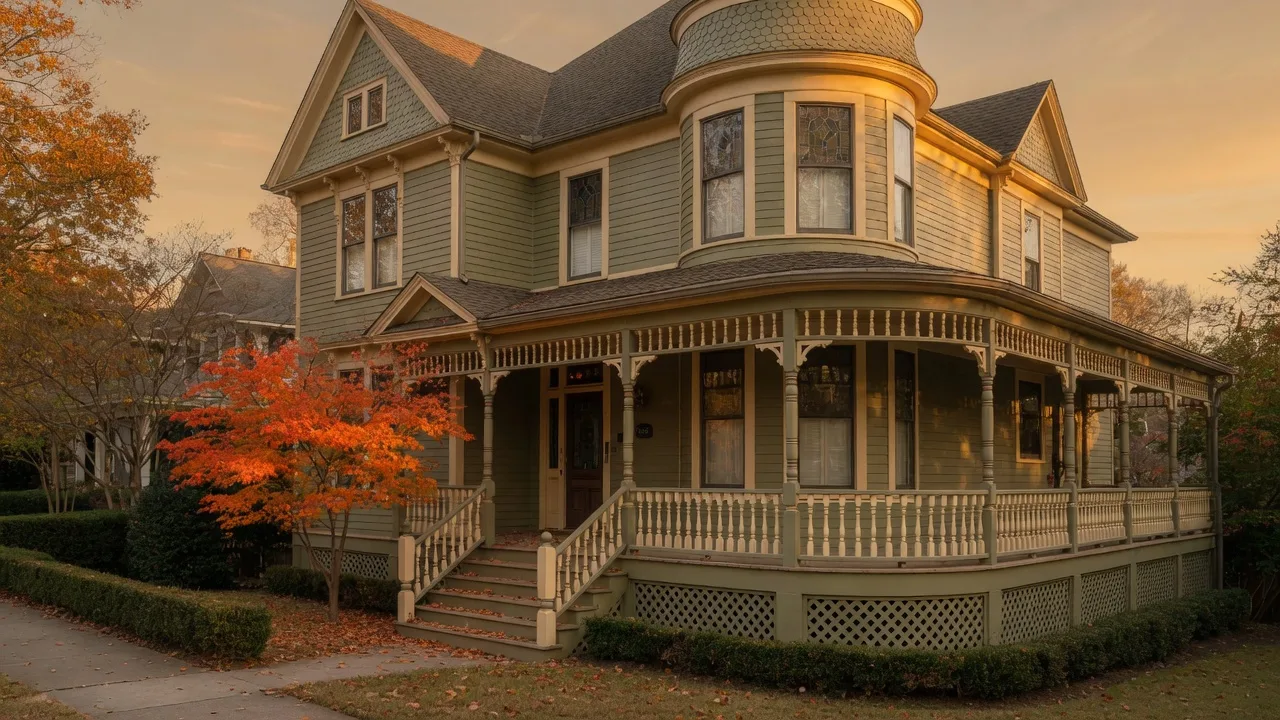
Historic O4W residential architecture
O4W as an
investment.
Why O4W Works for Investors
Old Fourth Ward is an established, walkable neighborhood with proven demand. As of late summer 2026, median sale prices now range from roughly $325K to $425K depending on property type, location, and data source -- a notable correction from the $525K+ highs of last year. Price per square foot averages around $300 to $350, with BeltLine-adjacent properties commanding a premium. Redfin scores O4W at 38 out of 100, calling it a "somewhat competitive" market -- a useful snapshot for investors trying to gauge buying power and negotiating room. Homes typically sell in 33 to 58 days depending on condition and pricing, with the sale-to-list ratio hovering near 97%. Metro-wide, months of supply has run roughly 3.7-5.4 months through 2026. What does that mean for O4W specifically? Buyers today have more choices and negotiating room than they did in 2024, with inventory up roughly 15% year over year. Overpriced listings tend to sit, while well-priced, well-presented homes near the BeltLine still attract offers quickly. For cash-flow investors, it is worth noting that entry prices are lower than a year ago, which can improve initial yields for buy-and-hold buyers entering the market now. The newest data through September 2026 confirms the direction: metro pending sales ran nearly 25% below a year earlier, the ninth straight monthly decline, and metro supply reached about 4.94 months, the most in over a decade. Buyers in O4W today have time to compare, inspect, and negotiate in a way they simply did not in 2022 or 2023.
What's Happening Now
Several new developments and policies are reshaping O4W's housing landscape right now. "The Towns at O4W" — a 31-home townhome project near Ponce City Market — has completed its first phase, adding modern for-sale inventory in a neighborhood where new construction is scarce. Meanwhile, the "City Lights" masterplanned redevelopment on Boulevard has progressed with its North Block building topping out in early 2026 — nearly 200 units backed by a $35 million Invest Atlanta commitment, with amenities like after-school programs, a business center, and a private courtyard. A major new mixed-use project at Highland Avenue and Boulevard — nearly 300 residences with retail and parking — received a $5.7 million tax incentive from the Development Authority of Fulton County in late 2024, with the developer committing to affordability provisions for 30 years.
On the infrastructure front, The Stitch -- a transformative $700 million project to build a 17-acre park capping a 3/4-mile stretch of I-75/85 -- keeps moving despite a $151 million federal funding pullback in late 2025. Central Atlanta Progress has said funding for the first phase is now secured, and the project team has been building momentum, including an LED sculpture reveal downtown in June 2026 ahead of construction. Phase 1, covering roughly five acres between Peachtree and Courtland, is now expected to break ground in 2027 with completion targeted around 2030, and the full 17-acre, 3/4-mile platform is targeted for 2030. On October 13, 2026 the project took another concrete step forward: leaders re-applied for a $60 million federal PROTECT grant after the earlier funding pullback and unveiled revised first-phase renderings that prioritize street improvements, with construction still slated for 2027. The project's own economic analysis projects roughly $2.4 billion in added property value and about $61 million in new annual local property tax revenue once the cap is complete. Backers are planning a special services district for commercial and multifamily property owners to fund ongoing operations, and the project's own analysis projects property values within a half-mile could rise up to 15%, a meaningful line item for O4W homeowners on the downtown side of the neighborhood. This project will physically reconnect Downtown Atlanta to Midtown and O4W, creating new green space, affordable housing, and transit-oriented development.
Across the Connector, the other half of that downtown reconnection story is taking shape. Centennial Yards, the roughly $5 billion, 50-acre redevelopment of the Gulch just south of the capitol, delivered its Fan Zone entertainment district ahead of the World Cup and keeps adding tenants: new retail opened in August 2026, and a tower with roughly 280 apartments plus neighborhood-serving shops is in the pipeline, with full buildout targeted around 2030. For O4W, the read is simple. The blocks between the neighborhood and downtown are filling in, and as The Stitch eventually caps the Connector, O4W's downtown-side streets gain a new walkable link to the city's core. For investors, South Downtown is the newest emerging corridor adjacent to O4W, showing the same early-cycle pattern O4W displayed a decade ago: big public infrastructure, cranes, and prices still well below the established intown premium.
Supply-side signal for investors: New apartment deliveries across metro Atlanta are projected to drop roughly 50% in 2026 compared to recent peaks. Fewer new units coming online means less competition for existing rentals in established intown neighborhoods like O4W -- and that historically supports upward pressure on rents. For buy-and-hold investors who already own in O4W, this is good news for same-store rent growth. For those looking to buy, it adds another reason to move sooner rather than later.
The freshest intown read: Adams Realtors' September 2026 Intown Market Report, which tracks single-family sales across Atlanta's core neighborhoods, shows prices still climbing while the pace cools. Over the past 12 months the intown average sales price rose about 3% to roughly $874,000, average days on market stretched to 49, up 17% from a year ago, and the number of homes sold slipped about 5%. In plain terms: values are holding in intown Atlanta, but homes are taking longer to sell and fewer are trading. For O4W buyers that is a comfortable combination, value that holds while the clock stays on your side. Agents describe the mood as "marry the house, date the rate": buyers are prioritizing walkability, outdoor space, and move-in-ready condition over timing the mortgage market, which plays directly to O4W's strengths.
Another emerging trend: Accessory dwelling units (ADUs) are being built at record levels across metro Atlanta, driven by strong rental demand, multi-generational household formation, and rising property values. Atlanta's zoning allows both attached and detached ADUs in most single-family residential zones. For O4W homeowners with extra yard space, adding a well-designed ADU can generate $1,200 to $1,800 per month in rental income while adding $120,000 to $180,000 in property value. It is a growing option for homeowners who want to offset their mortgage or house family members without sacrificing privacy. At the state level, Georgia House Bill 1166 passed the Georgia House in March 2026 and is now being considered by the Georgia Senate -- if enacted, it would override local zoning to allow homeowners statewide to build ADUs of 400 square feet or smaller on their lots.
O4W also sits within a federally designated Opportunity Zone. Under the One Big Beautiful Bill Act signed into law in July 2025, the federal Opportunity Zone program was made permanent, eliminating its previous sunset date. The 10-year tax-free appreciation benefit now has no expiration. Georgia's current OZ designations stay in effect through December 31, 2028, and the new OZ 2.0 map takes effect January 1, 2027, so the two overlap for two years. Georgia is nominating roughly 238 new zones under the OZ 2.0 map during the second half of 2026, with Treasury certification still pending. What actually closes at the end of 2026 is the OZ 1.0 deferral window: gains deferred under the original program are recognized on December 31, 2026, and new investments made after that date follow the rolling five-year deferral framework in the newly designated tracts. Existing O4W investments retain their full tax benefits. This designation has helped fund projects like the Waldo's Old Fourth Ward mixed-use development and is one reason the neighborhood continues to attract institutional investment even as national market conditions shift.
For existing homeowners, Georgia's new HOME Act (SB 33, signed May 2026, effective January 2027) caps annual taxable value increases based on inflation — a meaningful protection against tax shock in rapidly appreciating areas like O4W. Additionally, Invest Atlanta has expanded its Anti-Displacement Tax Relief Program — a $10 million initiative (partially funded by Tyler Perry) that helps legacy residents manage rising property taxes. If you've owned your home in O4W and your property tax bill has been climbing as values rise, both programs are worth exploring. Contact Invest Atlanta or reach out to Tommy to learn more. In November 2025, Atlanta voters also approved a new senior exemption: homeowners 65 and older can deduct $50,000 from Atlanta Public Schools property taxes on top of existing exemptions. Fulton County approved parallel senior exemptions. The annual application deadline is April 1.
What's driving
value here.
BeltLine Progress
The Atlanta BeltLine's full 22-mile loop is projected for completion by 2030, and approximately 16.7 miles of continuous mainline trail are now open as of late summer 2026 (with connector trails pushing the total further). The Southside Trail Segments 4+5 (Boulevard to Glenwood, 2.5 miles) opened in April 2026, and Segments 2+3 (west of I-75/85 to Boulevard, 1.9 miles) opened in early June 2026 ahead of FIFA World Cup matches. For O4W, the Eastside Trail is already the neighborhood's defining amenity — and as the full loop connects, properties along the existing Eastside segment benefit from being part of a continuous 22-mile urban trail. Studies show homes within a half-mile of a finished BeltLine segment see value increases of 18-27%. The BeltLine's May 2026 economic impact analysis put a number on that: the loop has drawn $14.2 billion in private investment across 318 completed developer projects with 93 more in the pipeline, sustains roughly 91,000 jobs, and generates an estimated $23 billion in annual economic output, powered by about $941 million in public and philanthropic investment, a return of roughly 15 to 1. For O4W buyers and homeowners, that is the clearest evidence yet that BeltLine adjacency is not a passing premium, it is the neighborhood's core value driver. The Northeast Trail has entered the construction bidding phase — an Invitation to Bid was issued in April 2026 for Segment 3 + Connector Trails (2.8 miles from Buford Highway to Peachtree Creek) with construction mobilization expected by late 2026 and a 42-month build timeline. The Westside Trail design continues (construction expected by 2027), and on September 10, 2026, crews broke ground on the Northwest Trail segment. Segment 3's first stretch is already open, and the elevated Segment 4B crossing active CSX rail lines in Blandtown was under construction through September 2026. It is one of the last remaining gaps before the full 22-mile loop closes. Then came a milestone worth marking: in October 2026 the BeltLine finalized nearly 200 land transactions that complete land assembly for the full 22-mile loop, a step officials say paves the way to finish the trail by 2030. For O4W that is the difference between a great neighborhood amenity and a guaranteed one. The Eastside Trail you walk today is now locked in to become part of one continuous loop, and that permanence is exactly what protects home values over the long run.
Streetcar & Transit Updates
Important change in 2025-2026: In March 2025, Mayor Andre Dickens withdrew support for the previously planned Streetcar East Extension along the BeltLine to Ponce de Leon Avenue, reprioritizing a southward extension along the Southside BeltLine trail to Murphy Crossing. By May 2025, the joint Program Governance Committee voted to halt all design work on the Eastside extension, with $9.1 million already spent on planning that is now shelved. Advocacy groups have criticized the decision after roughly $17 million was spent on studies with no completed rail projects after a decade of More MARTA sales tax collection.
As of late summer 2026, MARTA maintains that the East Extension "remains a priority" for the broader More MARTA program, but no timeline has been set to resume design work. BeltLine Inc. continues to support transit on the corridor, but for now the BeltLine itself — roughly 16.7 of 22 miles of mainline trail already open — remains O4W's defining amenity. One bright spot: MARTA launched its Rapid A-Line bus rapid transit route in April 2026, the city's first BRT line, connecting downtown to Summerhill and the BeltLine's Southside Trail, a useful new link for O4W residents heading south. In mid-October 2026 MARTA also confirmed that construction begins October 26 on its first Arterial Rapid Transit corridor, along Cleveland Avenue and Metropolitan Parkway, the opening move of a bus-rapid-transit network that will keep branching from the core. If you are waiting for light rail on the Eastside Trail before buying, you may be waiting a while. But MARTA settled a $52 million dispute with the city in August 2026, freeing funds the agency says support BeltLine light rail planning and new stations down the road, so the door is not closed. The trail alone has been the neighborhood's primary value driver for years, and that is not changing.
The other east-side line to watch is Connect Clifton. MARTA has spent the past few years refining bus-based alternatives for the Clifton Corridor from Lindbergh Center toward Emory and the VA Medical Center, and in February 2026 it recommended Lindbergh Center as the corridor endpoint. A Locally Preferred Alternative decision on the route and mode is expected later in 2026. It is a longer-horizon project with no shovels in the ground yet, but it keeps the east-side transit story moving even with the BeltLine streetcar shelved, and Lindbergh Center is a short MARTA ride from O4W's stations. For buyers weighing transit access today, the practical takeaway is unchanged: O4W already has rail, bus, and the BeltLine, and the corridor planning adds another layer of long-term upside rather than something to wait for before buying.
MARTA Infill Stations
MARTA has announced locations for three new infill stations, including a planned Krog Street/Hulsey Yard station that would be within easy reach of O4W. Infill stations are a big deal for property values — they add transit connectivity to neighborhoods that were built before modern rail access. While timelines are still being finalized, the announcement signals continued investment in Atlanta's transit infrastructure and adds another layer of long-term value for O4W residents.
The Stitch
One of the most transformative infrastructure projects in Atlanta's history, The Stitch is an approximately $700 million project to build a 17-acre park capping a ¾-mile stretch of the Downtown Connector (I-75/85) between Ted Turner Drive and Piedmont Avenue. This project will physically reconnect Downtown Atlanta to Midtown and Old Fourth Ward, neighborhoods that have been separated by the interstate for decades. The project hit a significant funding hurdle in late 2025 when the federal government withdrew $151 million that had been allocated for the effort, but local and state leaders have publicly committed to finding alternative funding, the first phase is now fully funded, and groundbreaking is expected in 2027 with completion targeted around 2030. Backers are planning a special services district for commercial and multifamily property owners to fund ongoing operations, and the project's own analysis projects property values within a half-mile could rise up to 15%, roughly $200 a year in added property tax per $100,000 of value. For O4W homeowners on the downtown side of the neighborhood, that is an infrastructure bet with a measurable upside. The Stitch also aims to support new affordable housing and transit-oriented development.
Streetscape & Bridges
The Ponce de Leon Avenue streetscape was completed in early 2025, delivering new sidewalks, street lighting, and a new BeltLine ramp between Boulevard and Freedom Parkway. The Jackson Street Bridge — one of Atlanta's most photographed spots — is also being redesigned to be more pedestrian- and cyclist-friendly. These improvements are small individually but add up: they signal continued investment in O4W's public spaces and make the neighborhood even more livable.
New Development
The Towns at O4W is a 31-home townhome project near Ponce City Market that has completed its first phase — adding modern for-sale inventory in a neighborhood where new construction is scarce. City Lights is a major mixed-income redevelopment along Boulevard, with its North Block building at 633 Parkway Drive topping out in early 2026 — nearly 200 units backed by $35 million in Invest Atlanta financing, including after-school programs, a business center, and a private courtyard. The Fourth Ward Project, anchored by the Olson Kundig-designed office towers fronting the BeltLine, has filled in its first residential phase, Overline Residences (359 units), and is advancing two more residential towers on parcels D and E near Ralph McGill Boulevard with up to 780 new apartments. Bedford Pines along Boulevard North is adding 387 units. Signal House, a 21-story, 162-unit building, and Henderson Place, an affordable mixed-use project, round out the recent wave of new housing. And the former Atlanta Medical Center site, now branded BLVDNEXT and being redeveloped by Integral Group, has cleared its final demolition stage, setting up a roughly 22-acre mixed-use district with about 2.4 to 2.6 million square feet of residential space, close to 240,000 square feet of office, and roughly 120,000 square feet of retail and dining, anchored by a full-service grocery store and pharmacy. Together, these projects are reshaping O4W's housing mix while preserving the neighborhood's character.
Common questions.
Is Old Fourth Ward a good place to invest in 2026?
Absolutely -- but the numbers have shifted from the 2024-2025 peak, and that is not necessarily bad news. O4W remains one of Atlanta's most sought-after intown neighborhoods. The latest market data shows median sale prices ranging from roughly $325K to $425K depending on property type, location, and data source -- a notable cooldown from the $525K+ peaks of 2024. Price per square foot averages around $300 to $350, with BeltLine-adjacent properties commanding a premium. Homes typically sell in 33 to 58 days depending on condition and pricing, and the market earns a Redfin competitiveness score of 38 out of 100 -- "somewhat competitive" -- a far cry from the bidding-war days of 2022 but still active for well-priced, well-presented homes. The sale-to-list ratio hovers near 97%, meaning most homes still sell slightly below asking, giving buyers negotiating room that didn't exist a few years ago. Inventory has increased roughly 15% year over year, giving buyers more choices. Mortgage rates have come down from the 7%+ highs of 2025 but climbed back above 7% in late September and averaged 7.28% for the week of October 1, 2026, so the monthly payment remains the deciding factor for most buyers. The clearest recent signal for O4W buyers: the Georgia MLS September recap shows metro pending sales running 24.8% below a year ago, the ninth straight monthly decline, with closed sales off 13.7% -- while active listings climbed to about 23,000, pushing supply to roughly 4.94 months, the most in over a decade. The metro median eased to $387,602, essentially flat year over year. That is the texture of a buyer's market -- more listings, more time, and real negotiating room -- and it shows up in O4W exactly that way: well-priced homes near the BeltLine still move, while anything priced above recent comps sits. What is different in late summer 2026? The FIFA World Cup has come and gone, briefly bringing global attention to Atlanta's intown neighborhoods and short-term rental demand. BeltLine trail connections continue expanding -- the Southside Trail Segments 4 and 5 opened in April 2026, and Segments 2 and 3 opened in early June 2026, bringing the continuous trail to approximately 16.7 miles with the full 22-mile loop targeted by 2030. The Northeast Trail has entered the construction bidding phase, and on September 10, 2026, officials broke ground on the Northwest Trail segment, one of the last remaining gaps in the loop. The Stitch, the 17-acre park that will cap I-75/85, keeps advancing too: funding for its first phase is secured, and construction of the roughly five-acre Phase 1 is expected to begin soon with completion targeted around 2029 to 2030. For rental investors, the numbers are worth a close look. Atlanta's multifamily vacancy rate ran about 5.9% in Q2 2026, down from 6.45% in Q1, as net absorption outpaced new deliveries. New apartment deliveries have fallen to a decade low: under 16,700 units delivered over the past year with units under construction at just 2.8% of inventory (Northmarq) -- fewer new units means less competition for existing rentals in O4W, which historically supports upward pressure on rents. Metro-wide average asking rent is roughly $1,600/month (Matthews, Q2 2026), and Zumper's Atlanta Metro Report puts the median two-bedroom at $1,950/month. In O4W specifically, average rents sit around $2,200 to $2,400 a month depending on property type and condition. For buy-and-hold investors, O4W remains a proven long-term play: walkability, BeltLine adjacency, strong rental demand from young professionals and families, and long-term appreciation driven by infrastructure. Just know that the easy mark-to-market gains of 2020-2024 are behind us. The best value today may be found in emerging BeltLine-adjacent neighborhoods like West End, Reynoldstown, Oakland City, and Sylvan Hills, where price points are lower but the same value drivers are taking hold, plus MARTA-served spots like Chamblee and Doraville where transit expansion is lifting investor interest. The newest emerging play sits right across the Connector from O4W: South Downtown, where the roughly $5 billion Centennial Yards redevelopment and new multifamily towers are pulling investor attention back toward the city core. Intown market reporting from July 2026 highlighted Chosewood Park and Peoplestown, further down the Southeast corridor, as home to some of the strongest buyer demand among more affordable intown neighborhoods, another sign that the same BeltLine playbook that transformed O4W is repeating a few miles away. Two more names joined the 2026 watch list. Summerhill, a short MARTA ride from O4W on the new Rapid A-Line, is carrying some of the strongest development momentum of any intown neighborhood right now, and analysts describe it as a buyer's market, which is exactly when patient investors like to move. A few blocks further down the Southside corridor, Pittsburgh is starting to turn over block by block, and analysts increasingly describe Capitol View as the "next Kirkwood" -- the same BeltLine playbook, earlier in the cycle, with entry prices still far below O4W's. For cash-flow buyers, the south metro is the other quiet favorite: Henry County towns like Stockbridge, Hampton, Locust Grove, and McDonough keep topping investor lists for the best rent-to-price math in the state, pairing entry prices well below intown with steady workforce rental demand. If you are looking to buy in O4W itself, the key is finding a well-priced property in the right location -- near the BeltLine, in good condition, or with renovation potential -- and holding it through the next cycle.
What's the difference between O4W and nearby neighborhoods?
O4W is more urban and walkable than most Atlanta neighborhoods. Compared to Inman Park (quieter, more residential), Poncey-Highland (trendier, more nightlife), and Midtown (denser, more corporate), O4W offers a unique blend of history, culture, and convenience. If you're looking for a similar vibe at a different price point, nearby Reynoldstown has seen strong appreciation driven by BeltLine access and limited inventory. For investors seeking lower entry points with similar upside patterns, emerging corridors like West End, Oakland City, and Capitol View/Adair Park offer 20--30% lower price points with improving BeltLine connectivity -- particularly now as the BeltLine's Southside Trail segments opened ahead of the World Cup and are now part of a continuous trail network.
What tenant protections exist for renters in O4W?
Georgia passed the "Safe at Home Act" (House Bill 404) in 2024, effective July 1, 2024. Key protections include: security deposits capped at two months' rent, a three-business-day grace period before eviction filings for nonpayment, habitability standards for rental properties, and a prohibition on landlords shutting off utilities during eviction proceedings. Georgia does not have rent control -- state law prohibits local governments from enacting rent caps -- but these new protections represent meaningful progress for renters. Current Georgia law also requires landlords to provide 60 days' written notice before increasing rent or terminating a month-to-month tenancy -- so if you are a renter in O4W, you should have at least a full billing cycle of advance warning before any rent change takes effect. In 2025, an additional law (HB 399) added a new requirement: out-of-state landlords who own single-family or duplex rental properties in Georgia must now hire a Georgia-licensed property manager or real estate broker to oversee their properties. This affects O4W landlords who live outside Georgia -- if that's you, you'll need a local representative to stay compliant. If you're considering short-term rentals in O4W, there are some local rules to be aware of. Atlanta requires a $150-a-year short-term rental license with a two-adults-per-bedroom occupancy cap. The old rule limiting hosts to two licenses (primary residence plus one additional unit, Part 20 of the city code) was removed by the City Council on September 27, 2026, effective January 1, 2027, which also clears the way for enforcement of the 2021 ordinance that had been stalled in legal limbo. In 2025 a ban on new STRs was enacted in the Home Park neighborhood near Georgia Tech. New 2026 legislation (26-R-3105 and 26-O-1084), still pending in council committee, would create an Office of Short-Term Rentals, require STRs to be the host's primary residence occupied at least 275 days per year, and cap unhosted rentals at 90 nights annually, so the framework could still tighten. If you're thinking about buying a condo or townhome in O4W as a short-term rental play, it's worth checking current building-level caps and talking to Tommy about the latest regulations. The 2025-2026 legislative session weighed a "Renters' Bill of Rights" (HB 708) and a right-to-repair-and-deduct measure (HB 876), but neither became law before sine die on April 2, 2026, so Georgia tenants still have no repair-and-deduct right. One bill that did become law this session: HB 346 prohibits landlords from retaliating against tenants for exercising their legal rights, such as requesting repairs or reporting code violations. The Safe at Home Act remains the core tenant protection: security deposits capped at two months' rent, a three-business-day grace period before eviction filing for nonpayment, habitability standards, and no utility shutoffs during eviction proceedings. One new change is on the books for 2027: the Georgia Property Owners' Bill of Rights Act (SB 406), signed in May 2026, adds a provision effective January 1, 2027 that lets a court, on motion and after a hearing, seal the records of a dispossessory (eviction) proceeding from public view. It is Georgia's first eviction-record sealing mechanism, which matters for renters worried about a past filing showing up in background checks; landlords can still pursue amounts owed in a separate action. One underwriting note for landlords: Princeton's Eviction Lab reported in fall 2026 that Atlanta leads the nation in eviction filings, with more than 140,000 metro-area cases filed this year, driven by a fast eviction process and rising rents. Screen on current, documented payment history, keep habitability work current, and budget for turnover, because courts are processing a heavier docket. Always document everything and keep written records of all repair requests. At the city level, Atlanta has its own stricter security deposit rules. The Atlanta "Renter's Choice" ordinance (20-O-1423) caps security deposits at 1.5 months' rent (tighter than the state's 2-month cap) and gives tenants the option to pay deposits in three installments or purchase rental security insurance instead. This applies to landlords with more than 10 units.
Are there family-friendly options in O4W?
Absolutely. O4W has playgrounds, parks, and family-oriented events throughout the year. Several schools serve the area, including Hope-Hill Elementary and Kindezi Old Fourth Ward charter school. The neighborhood's walkability and green spaces make it a great fit for families who want urban living without a car-dependent lifestyle.
What should I know about HOA fees and condo assessments?
Many of the newer condo and townhome developments in O4W have HOA fees that can range from $200 to $600+ per month, covering amenities like rooftop pools, fitness centers, and parking. Older homes typically don't have HOAs, but historic district guidelines may apply to exterior renovations.
What new developments should I know about and what is being built right now?
Several projects are reshaping O4W's housing landscape. "The Towns at O4W" has completed its first phase -- a 31-home townhome development near Ponce City Market adding modern for-sale inventory. The City Lights mixed-income redevelopment on Boulevard has progressed with its North Block building at 633 Parkway Drive (the Wren at 640) topping out in early 2026 -- 187 units of affordable housing backed by $78.9 million in financing including $35 million from Invest Atlanta, with after-school programs, a business center, and a private courtyard. A new 300-unit mixed-use development at Highland Avenue and Boulevard secured a $5.7 million tax incentive from the Development Authority of Fulton County in late 2024, with 30 years of affordability commitments. The Fourth Ward Project, anchored by the Olson Kundig-designed office towers fronting the BeltLine, has filled in its first residential phase, Overline Residences (359 units), and is advancing two more residential towers on parcels D and E near Ralph McGill Boulevard with up to 780 new apartments. Bedford Pines along Boulevard North is adding 387 units, and the new Signal House (21 stories, 162 units) and Henderson Place affordable development add to the recent housing wave. And the former Atlanta Medical Center site adjacent to O4W -- now branded BLVDNEXT and being redeveloped by Integral Group -- has cleared its final demolition stage, setting up a roughly 22-acre mixed-use district with about 2.4 to 2.6 million square feet of residential, close to 240,000 square feet of office, and roughly 120,000 square feet of retail and dining, anchored by a full-service grocery store and pharmacy. On top of all that, O4W sits within a federally designated Opportunity Zone, which has attracted significant private investment through the Sixty West O4W Opportunity Fund and offers tax incentives that make investing in the neighborhood more attractive. These projects signal continued long-term confidence in O4W.
Are there programs to help with rising property taxes?
Yes. Three major protections are now in place. First, Georgia's Homeownership Opportunity and Market Equalization (HOME) Act (SB 33), signed into law May 11, 2026 and effective January 1, 2027, caps annual increases in the taxable value of homesteaded properties based on inflation -- making the existing "floating" homestead exemption mandatory statewide. This is a significant change for O4W homeowners: your assessed value will still rise with the market, but your taxable value increase will be limited year-over-year, smoothing out the sticker shock that comes with rapid appreciation. Additionally, Invest Atlanta's Anti-Displacement Tax Relief Program -- a $10 million initiative partially funded by Tyler Perry -- helps legacy homeowners in rapidly appreciating neighborhoods cover property tax increases above a base-year amount for up to 20 years. If you've owned your home in O4W for a while and your tax bill has jumped alongside rising values, both of these programs are worth exploring. Contact Invest Atlanta or reach out to Tommy to learn more. New in late 2025: Atlanta voters approved a new senior homestead exemption in November 2025. Homeowners 65 and older can now deduct $50,000 from their Atlanta Public Schools property taxes, on top of existing homestead exemptions. Fulton County also approved parallel senior exemptions. The annual application deadline is April 1, so retirees planning to move to O4W should factor this into their timeline if they want the exemption in their first year. One more 2026 addition worth knowing: the Georgia Property Tax Relief Grant (House Bill 439), signed into law in May 2026, delivers a one-time relief package of roughly $950 million by reducing the assessed value of homesteaded properties by $18,000 for the 2026 tax year. For O4W homeowners with an active homestead exemption, that is real money on this year's tax bill, and it pairs with the new HOME Act caps arriving in 2027. If you are not sure your homestead exemption is on file, the Fulton County tax commissioner's office can confirm, and the relief lands on your account automatically once the exemption is active.
Let's find your
place in O4W.
Whether you're looking for a historic bungalow, a modern condo, or just want to understand what's available in the neighborhood, Tommy can help you navigate the O4W market with honest, local expertise.
Talk to Tommy