
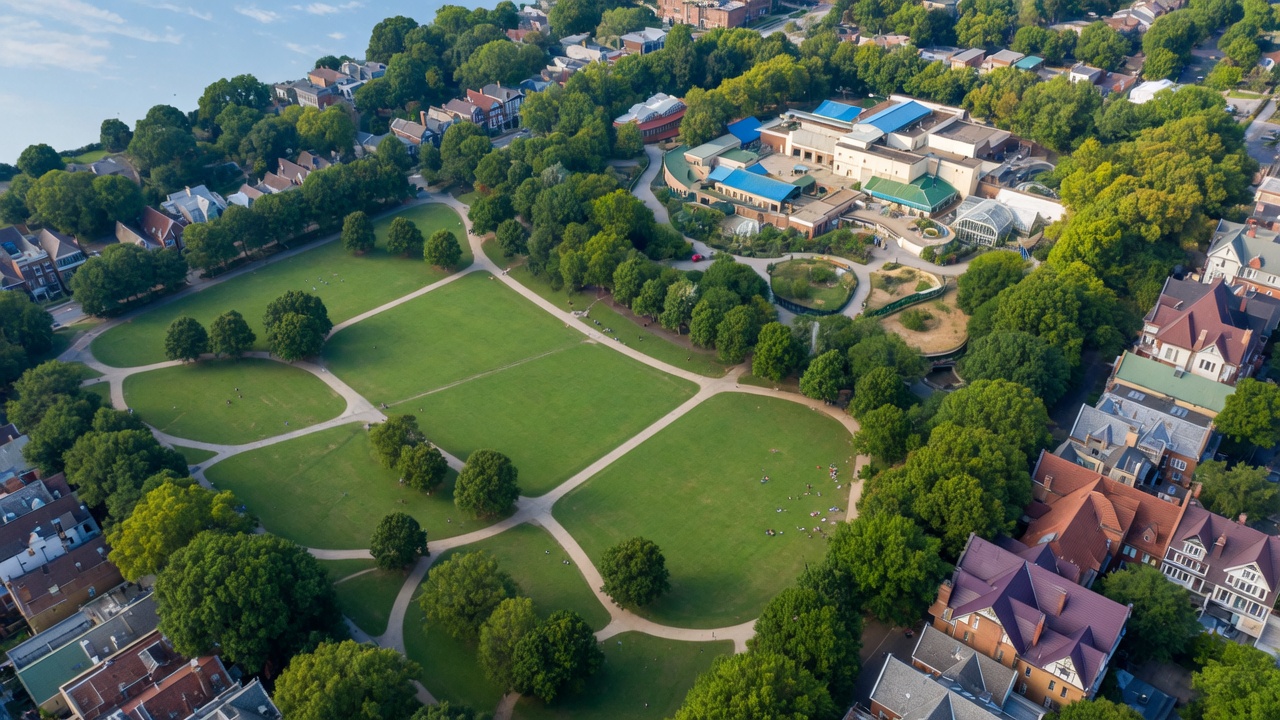
Grant Park is Atlanta's oldest neighborhood — and in many ways, its most complete. Where other intown areas have reinvented themselves through BeltLine development, food halls, or nightlife corridors, Grant Park has done something harder: it has stayed itself. The Victorian mansions still stand. The park is still the center of community life. And the neighborhood's identity, rooted in a single act of civic generosity in 1883, remains intact more than 140 years later.
If you're considering Grant Park — whether as a visitor, a renter, or a future homeowner — here's what you need to know about one of Atlanta's most historically significant and livable neighborhoods.
Where Is Grant Park?
Grant Park sits just south of downtown Atlanta, bordered by Boulevard to the west, the CSX rail line and Ormewood Park to the south, Interstate 20 to the east, and the Grant Park Cemetery (now Oakland Cemetery) to the north. The neighborhood straddles the 30312, 30315, and 30316 zip codes, and it's served by Atlanta Public Schools.
The location is remarkably central. You're a short drive from downtown, Midtown, and the BeltLine Eastside Trail. Cabbagetown and Reynoldstown are to the north. East Atlanta Village and Kirkwood are to the east. The neighborhood's position south of downtown gives it a slightly quieter feel than its neighbors to the north, but without sacrificing accessibility.
What Makes Grant Park Special?
Grant Park isn't a trend. It's a legacy. Here's what sets it apart from every other neighborhood in Atlanta:
The Park Itself
The neighborhood takes its name from Grant Park — Atlanta's oldest city park. In 1883, retired Civil War engineer and businessman Lemuel P. Grant donated 100 acres of land to the city of Atlanta for use as a public park. It was one of the earliest acts of civic philanthropy in Atlanta's history, and it gave the city its first green space at a time when Atlanta was still a young, rapidly growing railroad town.
The park has anchored the neighborhood ever since. Today, Grant Park is a 131-acre urban oasis with walking paths, picnic areas, a playground, a lake (Lake Tiermor), and the kind of mature tree canopy that takes a century to grow. It's the kind of place where families spend entire Saturday afternoons — kids on the playground, adults on blankets with books, dogs off-leash in the designated areas.
Zoo Atlanta
Zoo Atlanta, one of the city's most popular attractions, sits within the park's boundaries. Founded in 1889 — just six years after the park was established — the zoo is home to over 1,000 animals representing more than 200 species. It's perhaps best known for its giant pandas (which lived there for over two decades), but the zoo also features African elephants, gorillas, orangutans, and an extensive reptile collection.
For Grant Park residents, the zoo isn't just an attraction — it's part of the neighborhood fabric. Walking paths connect the zoo to the surrounding streets, and the presence of the zoo gives the park a year-round draw that most urban parks don't have. Zoo members can walk over on a weekday morning, see the animals for an hour, and be home by lunch.
The Architecture
Grant Park has one of the finest collections of Victorian-era architecture in Atlanta. The neighborhood was developed primarily between the 1880s and the 1920s, and the housing stock reflects that era — ornate Italianate mansions, Folk Victorian cottages, Queen Anne homes with wraparound porches, and handsome Craftsman bungalows from the early 20th century.
What makes Grant Park's architecture special isn't just the individual homes — it's the streetscape as a whole. Walking through the neighborhood feels like moving through a living history of Atlanta's residential architecture. Grand homes sit next to modest cottages. Mature oaks shade front yards that have been tended for over a century. The scale is human, the craftsmanship is visible, and the sense of place is unmistakable.
The Summer Shade Festival
Every August, Grant Park hosts the Summer Shade Festival — a free, two-day celebration that has become one of Atlanta's most beloved neighborhood events. Organized by the Grant Park Conservancy, the festival features live music, an artist market with over 140 regional artists, a vintage vendor showcase, food from local restaurants, and family-friendly programming.
Summer Shade is both a community celebration and a fundraiser — proceeds support the Conservancy's work restoring and maintaining Grant Park. For residents, it's the kind of event that reinforces what they already know: this neighborhood knows how to take care of itself.
The Sense of Community
Walk through Grant Park on any given weekend and you'll see what makes it different from other intown neighborhoods. Neighbors chat on front porches. Kids play in the park. Dog walkers greet each other by name. The neighborhood has the kind of community infrastructure — active neighborhood association, regular events, shared investment in public spaces — that turns a collection of houses into a real neighborhood.
The Grant Park Neighborhood Association is one of the most active in Atlanta, organizing cleanups, social events, and advocacy around issues that matter to residents. The Grant Park Conservancy maintains the park and advocates for its future. Together, these organizations give the neighborhood a sense of stewardship that you don't find everywhere in Atlanta.
Housing Styles: What You'll Find
Grant Park's housing stock is diverse, historic, and — in the best cases — impeccably maintained. Here's the breakdown:
Victorian Mansions
The crown jewels of Grant Park. These grand, 3,000–5,000+ square-foot homes were built for Atlanta's industrial and professional elite in the late 19th century. Expect ornate woodwork, high ceilings, wraparound porches, and the kind of craftsmanship that money can't buy today. Renovated Victorians in Grant Park can range from $600,000 to well over $1.5 million.
Folk Victorian and Queen Anne Cottages
Smaller but no less charming, these 1,200–2,500 square-foot homes were built for Atlanta's middle class in the same era. Gabled roofs, decorative trim, front porches, and the kind of details — pressed tin ceilings, heart pine floors, original millwork — that give Grant Park its visual richness. Cottages typically sell in the $350,000–$550,000 range.
Craftsman Bungalows
Early 20th-century bungalows with wide front porches, exposed rafter tails, and the warm, handmade feel of the Arts and Crafts movement. These are the workhorses of Grant Park's housing stock — solid, livable homes that have been updated over the decades while retaining their original character. Bungalows typically sell in the $350,000–$600,000 range.
Modern Infill and New Construction
New development has arrived in Grant Park, primarily in the form of modern single-family homes and townhomes on infill lots. These homes offer contemporary finishes and open floor plans — a contrast to the historic housing stock, and a point of tension for some residents. New construction in Grant Park typically starts around $550,000 and can exceed $1 million for larger custom homes.
What Does Grant Park Cost?
Grant Park's pricing reflects its desirability, its location, and the quality of its housing stock. As of 2025–2026:
Median sale price: Approximately $600,000–$650,000 across all home types, with significant variation by size, condition, and historic detail.
Price range: From roughly $340,000 for small cottages or condos to over $1.5 million for fully restored Victorian mansions.
Rental rates: One-bedrooms from approximately $1,500/month; two-bedrooms from $1,800–$2,200/month; larger homes or renovated properties command higher rents.
Days on market: Well-priced homes in Grant Park move quickly — often within two to three weeks. The best properties, particularly those with preserved historic details on desirable blocks, can sell within days.
Walk Score: Approximately 59 — "somewhat walkable" — reflecting the neighborhood's residential character and its proximity to commercial corridors on Memorial Drive and Boulevard.
Schools & Family Life
Grant Park is served by Atlanta Public Schools. The primary school option is Parkside Elementary, located within the neighborhood. Nearby options include Wesley International Academy and the broader array of public, private, and charter schools available throughout the intown area.
For families, Grant Park offers one of the best combinations of space, community, and amenities in Atlanta. The park itself is a natural gathering place for families. The zoo provides year-round entertainment. The streets are quiet enough for kids to ride bikes, and the sense of community means families look out for each other's children in a way that feels increasingly rare in urban neighborhoods.
The BeltLine Connection
Grant Park's relationship with the Atlanta BeltLine is now fully realized. The Southside Trail is open — the Southeast Trail segments connecting the Krog Street Tunnel to Boulevard opened in April 2026, and the remaining segments to the south followed in June 2026, completing the roughly 17-mile continuous loop. Grant Park residents can now ride the trail to Glenwood Park, Ormewood Park, Chosewood Park, and all the way around the city, and the trail's network of restaurants, shops, and public art keeps growing.
The BeltLine connection is important for Grant Park, but the neighborhood's appeal doesn't depend on it. Unlike neighborhoods that were transformed overnight by trail access, Grant Park's identity was established long before the BeltLine existed — and it will endure regardless of what happens with the trail. That independence is part of what makes the neighborhood stable and appealing.
What's Nearby
One of Grant Park's strongest selling points is its proximity to Atlanta's other best neighborhoods:
Cabbagetown to the north offers colorful shotgun houses, the Krog Street Tunnel, and Carroll Street Cafe. Reynoldstown provides additional dining options and BeltLine Eastside Trail access. East Atlanta Village to the east has restaurants, bars, and live music. Ormewood Park to the south offers Craftsman bungalows and a quieter residential feel.
Old Fourth Ward and Ponce City Market are a short drive or bike ride north. Downtown Atlanta is minutes away. Living in Grant Park means you're at the center of a constellation of Atlanta's most interesting neighborhoods — each with its own character, each accessible from your front door.
What's New in Grant Park
Two things stand out this fall. First, the BeltLine's Southeast Trail opened in April 2026, completing the trail connection from Boulevard to Glenwood Avenue. Grant Park is now fully linked to the loop, with direct trail access to Ormewood Park, Glenwood Park, and beyond. Second, the Beacon complex on Grant Street is adding two new community spots: Kinship Butcher & Sundry is opening a second location there, and Meeples Games and Goods, a board game cafe, is planned for the same building.
On the event calendar, Sunday in the Park at Historic Oakland Cemetery returns September 27, 2026, and the neighborhood's farmers market and porch culture keep the community feel strong all year.
Tips for Getting to Know Grant Park
Walk through the park first. Start at the main entrance on Cherokee Avenue and walk the paths. See the lake, the playground, and the tree canopy. This is the heart of the neighborhood, and it will tell you more about Grant Park's character than any street of houses can.
Walk the residential streets. Stroll Cherokee Avenue, Confederate Avenue (now renamed), and the surrounding blocks to see the Victorian mansions and Craftsman bungalows up close. Pay attention to the front porches, the mature trees, and the way the neighborhood feels — human-scaled, settled, and proud.
Grab coffee at Grant Park Coffeehouse. This neighborhood coffee shop on Georgia Avenue is the local gathering spot. It's the kind of place where you'll see neighbors catching up and where you can get a feel for the community over a well-made latte.
Visit the zoo. Even if you're not a zoo person, a walk through Zoo Atlanta gives you a sense of the neighborhood's most famous landmark and its connection to the park.
Check the Summer Shade Festival. If you're visiting in late August, the Summer Shade Festival is the neighborhood's signature event — live music, artists, food, and community in the park. It's the fastest way to understand what makes Grant Park special.
Walk to Memorial Drive. Head east to the Memorial Drive corridor for restaurants, coffee shops, and a growing commercial scene that gives Grant Park residents easy access to dining and shopping without leaving the neighborhood.
About the Author

Tommy Williams
Tom Will Sell Atlanta · Intown Atlanta Expert
Tommy knows Grant Park and Atlanta's intown neighborhoods inside and out. Whether you're exploring for the first time or ready to make a move, he can help you find the right fit.