
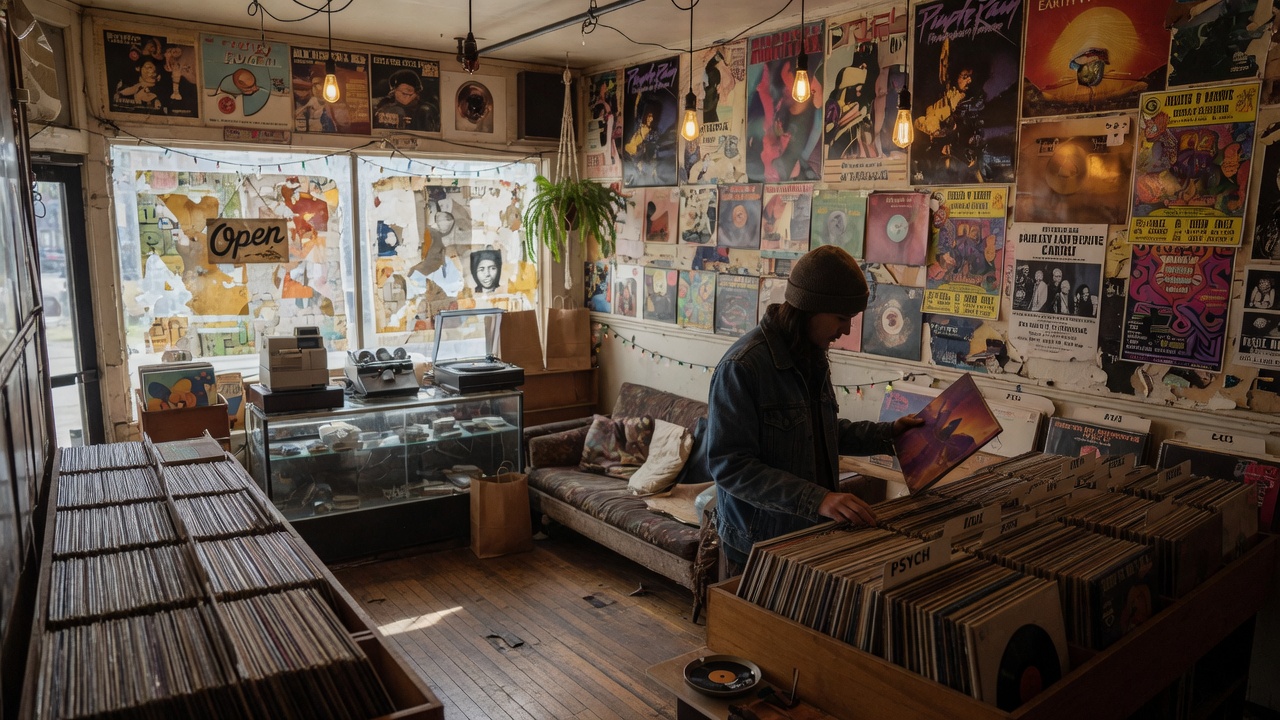
Little Five Points — L5P to anyone who knows Atlanta — is the city's bohemian capital. It's the neighborhood where punks and professionals share sidewalks, where a skull-shaped entrance leads to one of the best burger joints in the South, and where vintage record stores sit next to independent coffee shops with the same unapologetic confidence that has defined this corner of Atlanta for decades. If Old Fourth Ward is the polished sibling and Inman Park is the well-dressed one, Little Five Points is the one who shows up in a thrift-store jacket and steals the room.
Located just east of downtown Atlanta at the convergence of Euclid Avenue, Moreland Avenue, and McLendon Avenue, Little Five Points is one of the city's most walkable and visually distinctive neighborhoods. It's bordered by Inman Park to the west, Cabbagetown and Reynoldstown to the northwest, and the residential streets of the broader Ponce-Highland area to the north and south. Here's your complete guide to what makes L5P tick — its history, its culture, its food and shops, and what it's like to actually live here.
The Vibe: Counterculture With Deep Roots
Little Five Points has been Atlanta's counterculture neighborhood since long before that phrase became a marketing term. The area was developed in the early 1900s as a streetcar suburb — modest Victorian homes and Craftsman bungalows built for working-class families connected to downtown by the Atlanta Railway & Power trolley line. For decades, it was a quiet, unremarkable residential area.
That changed in the 1960s and 1970s, when the neighborhood — like many intown Atlanta areas — experienced disinvestment, white flight, and rising vacancy. But L5P's proximity to the city center and its affordable rents attracted a different kind of newcomer: artists, musicians, students, and people who valued authenticity over polish. By the early 1980s, Little Five Points had re-emerged as Atlanta's epicenter of alternative culture — a place where punk rock, independent film, vintage fashion, and radical politics all found a home.
That foundation has never been demolished. While other Atlanta neighborhoods have been remade by each wave of development, L5P has absorbed change without surrendering its identity. Walk through the commercial district today and you'll find the same essential ingredients that have been here for forty years: record stores, vintage clothing shops, tattoo parlors, independent bookstores, and restaurants that answer to no one's corporate playbook. The difference is that the neighborhood now shares its block with some genuinely excellent dining and a craft cocktail scene that would hold its own in any city.
The Iconic Spots: What Makes L5P Famous
Every neighborhood has its landmarks — the places that put it on the map. Little Five Points has several, and each one tells a piece of the neighborhood's story.
The Vortex Bar & Grill is L5P's most recognizable institution. Located at 438 Moreland Avenue, The Vortex is famous for two things: its massive, skull-shaped entrance (you literally walk through a giant skull to get inside) and its burgers. The menu is unapologetically indulgent — double-stacked patties, loaded fries, and a beer list that runs deep. The Vortex has been an Atlanta institution since 1992, and its L5P location has become one of the most photographed spots in the city. If you visit Little Five Points and don't walk through the skull, you missed the point.
Criminal Records at 1154 Euclid Avenue is one of Atlanta's premier independent record stores. It carries vinyl, CDs, and music accessories alongside pop culture merchandise, and it's been a cornerstone of L5P's music culture for decades. The store hosts in-store signings, listening events, and Record Store Day celebrations that draw music lovers from across the metro area.
The Junkman's Daughter is an alternative superstore that has occupied a Moreland Avenue storefront since 1986. Part vintage clothing, part costume shop, part novelty store, part art gallery — it's impossible to categorize and impossible to leave empty-handed. The Junkman's Daughter is the physical embodiment of L5P's spirit: weird, wonderful, and completely unapologetic.
Wax 'N' Facts, at 432 Moreland Avenue, is a beloved independent record store specializing in vinyl. For crate diggers and music obsessives, it's a pilgrimage destination — a place where you can spend an hour flipping through bins and discover something you didn't know you needed.
A Capella has been a Little Five Points institution for decades — a restaurant and gathering place that embodies the neighborhood's eclectic, community-driven spirit. It's the kind of spot where you'll find regulars who've been coming for years sitting next to newcomers who just discovered it.
Dining and Coffee: Better Than You'd Expect
L5P's food and drink scene has matured significantly while staying true to the neighborhood's independent ethos. The commercial district along Moreland Avenue and Euclid Avenue offers a mix of casual eateries, coffee shops, and bars — all locally owned, all with personality.
Aurora Coffee at 468 Moreland Avenue is the neighborhood's go-to for a well-made cup. It's a straightforward, no-pretense coffee shop that serves quality roasts in a space that feels like a community living room. For coffee lovers moving to L5P, Aurora is the kind of spot that becomes part of your daily ritual.
Manuel's Tavern, technically at the corner of North Highland Avenue and Ponce de Leon, has served as Atlanta's unofficial town square since 1956. While it sits just outside L5P's strict boundaries, it's deeply intertwined with the neighborhood's identity — a place where politicians, artists, students, and longtime Atlantans have gathered for decades over pitchers of beer and plates of bar food.
The broader dining landscape includes everything from taco joints to Mediterranean spots, brunch cafés to late-night bars. What ties it together is the same thread that runs through L5P itself: independence, character, and a refusal to be generic.
The Festivals and Street Life
Little Five Points knows how to throw a party — and the neighborhood's festivals are some of the most distinctive in Atlanta.
The Little Five Points Halloween Festival & Parade is the neighborhood's signature event and one of Atlanta's most beloved annual traditions. Held every October, the festival transforms the commercial district into a massive street party with live music, food vendors, art installations, and a parade that draws thousands of costumed revelers. It's wild, it's creative, and it captures everything that makes L5P special in a single weekend.
The Little 5 Fest (L5Fest) is a music and arts festival that celebrates the neighborhood's creative community. Featuring local and regional bands, art installations, and vendor markets, L5Fest is a more intimate celebration of the culture that makes Little Five Points what it is.
Beyond the organized festivals, L5P's street life is a year-round phenomenon. The intersection of Moreland and Euclid is a natural gathering point — people-watching here is a sport, and the sidewalk traffic on a warm evening has an energy that's hard to manufacture. Street musicians, buskers, and impromptu gatherings are part of the daily rhythm.
Proximity to Inman Park and Cabbagetown
One of Little Five Points' greatest assets is its location. The neighborhood sits at a crossroads of some of Atlanta's most desirable intown communities:
Inman Park is immediately to the west — a short walk or bike ride across the Boulevard connector. Inman Park brings Victorian mansions, BeltLine access, Freedom Park, and one of Atlanta's best restaurant corridors (Highland Avenue) into L5P's orbit. The two neighborhoods share residents, patrons, and a general sense of being part of the same east-side ecosystem.
Cabbagetown lies to the northwest, just across the railroad tracks. Atlanta's tiniest neighborhood — a 19th-century mill village turned bohemian enclave — is a natural complement to L5P. Cabbagetown's Carroll Street dining, street art murals, and tight-knit community feel blend seamlessly with Little Five Points' energy.
Reynoldstown, to the north, offers additional dining and coffee options along Lake Avenue, plus direct BeltLine access via the Eastside Trail. Old Fourth Ward and Ponce City Market are a short drive or bike ride away, connecting L5P residents to Atlanta's broader intown dining, shopping, and trail network.
This proximity means that living in Little Five Points gives you access to the cultures and amenities of four or five neighborhoods without leaving a two-mile radius. It's one of the most connected locations in intown Atlanta.
Housing: Bungalows, Victorians, and Apartments
Little Five Points' housing stock reflects its long history and diverse community. The neighborhood offers a wider range of housing styles and price points than many intown Atlanta areas.
Craftsman Bungalows: The backbone of L5P's residential streets. These early 20th-century homes — typically two to three bedrooms, 1,000 to 1,800 square feet — feature front porches, gabled roofs, hardwood floors, and the warm character that makes intown living so appealing. Many have been thoughtfully renovated with updated kitchens and bathrooms while preserving original details.
Victorian Cottages: L5P has a collection of late 19th-century Victorian homes — smaller than the grand Victorians in Inman Park but full of charm. Decorative trim, tall ceilings, and period details give these homes a distinct personality. They're typically two to three bedrooms and appeal to buyers who value character over square footage.
Shotgun Houses and Cottages: Scattered throughout the neighborhood are smaller, more modest homes — shotgun-style layouts, mill-worker cottages, and mid-century ranches. These homes are popular with first-time buyers, investors, and anyone looking for an affordable entry into intown Atlanta.
Apartments and Lofts: L5P has a robust rental market, with options ranging from older garden-style apartment buildings to newer mixed-use developments. The historic Bass Lofts and similar conversions offer industrial-meets-residential spaces that appeal to young professionals and creatives.
Price Ranges: As of 2026, single-family homes in Little Five Points typically list between $350,000 and $750,000, depending on size, condition, and lot location. Renovated bungalows and Victorians in prime spots command the upper end, while smaller homes and fixer-uppers offer more accessible entry points. Median home values hover around $450,000–$550,000 for a typical two-to-three-bedroom bungalow. Rental rates average around $1,800–$2,200 per month for a one- or two-bedroom unit, with newer developments and larger units commanding higher rents.
What Makes Little Five Points Different
Atlanta has no shortage of distinctive neighborhoods, but Little Five Points occupies a unique position in the city's geography and culture. Here's what sets it apart:
It's the counterculture anchor. While other neighborhoods have leaned into polish and development, L5P has maintained its edge. The punk shops are still here. The vintage stores are still here. The attitude is still here. This isn't a neighborhood that's been rebranded — it's a neighborhood that's been consistent.
It's a crossroads. Physically and culturally, Little Five Points sits at a junction. Euclid, Moreland, and McLendon converge here, and so do the cultures of Inman Park, Cabbagetown, Reynoldstown, and the broader east side. L5P borrows from all of them and gives back its own flavor.
It's walkable. With a Walk Score of 88, Little Five Points is one of the most pedestrian-friendly neighborhoods in Atlanta. You can walk to coffee, dinner, a record store, and a vintage jacket without getting in your car. That's rare in Atlanta, and it's one of L5P's most practical advantages.
It's real. In a city where "authentic" has become a marketing word, Little Five Points is genuinely authentic. The businesses here are owned by people who live here. The culture here was built by the community, not by a developer's brand guidelines. That authenticity is L5P's most valuable asset — and it's not for sale.
What's New in Little Five Points
The commercial district turned over a bit this year, as it always does. Hudson Grille closed its L5P location in 2026 after a six-year run, and Little Five Points Diner closed again in September 2026. On the plus side, Moonlight Pizza has settled into the former Little 5 Pizza space and stays open until 4 a.m., which fits the neighborhood's late-night rhythm. The anchors, The Vortex, Aurora Coffee, Manuel's Tavern, and the record stores, are all going strong.
Tips for Getting to Know L5P
Walk Moreland Avenue. The commercial district is compact enough to explore on foot in an afternoon. Start at The Vortex, walk north, and let the record stores, vintage shops, and cafés pull you in. You'll discover more in an hour of walking than in a week of Googling.
Visit Criminal Records on a Saturday. Weekend browsing at Criminal Records is a L5P ritual. The staff is knowledgeable, the selection is deep, and you'll leave with something you didn't know you wanted.
Come for Halloween. If you're considering a move to L5P, attend the Halloween Festival. It's the neighborhood at its most vivid — creative, communal, and completely itself. It will tell you everything you need to know about whether L5P is your kind of place.
Cross the borders. Walk west into Inman Park, northwest into Cabbagetown, or north toward Ponce. L5P's borders are porous, and the surrounding neighborhoods add layers to the experience.
Talk to the shop owners. L5P's business owners are some of the most interesting people in Atlanta. Strike up a conversation at the record store, the coffee shop, or the vintage clothing boutique. They know the neighborhood's stories better than any guide.
About the Author

Tommy Williams
Tom Will Sell Atlanta · Intown Atlanta Expert
Tommy knows Little Five Points and every surrounding neighborhood inside and out. Whether you're drawn to L5P's counterculture energy or just looking for the right intown home, he can help you find it.