
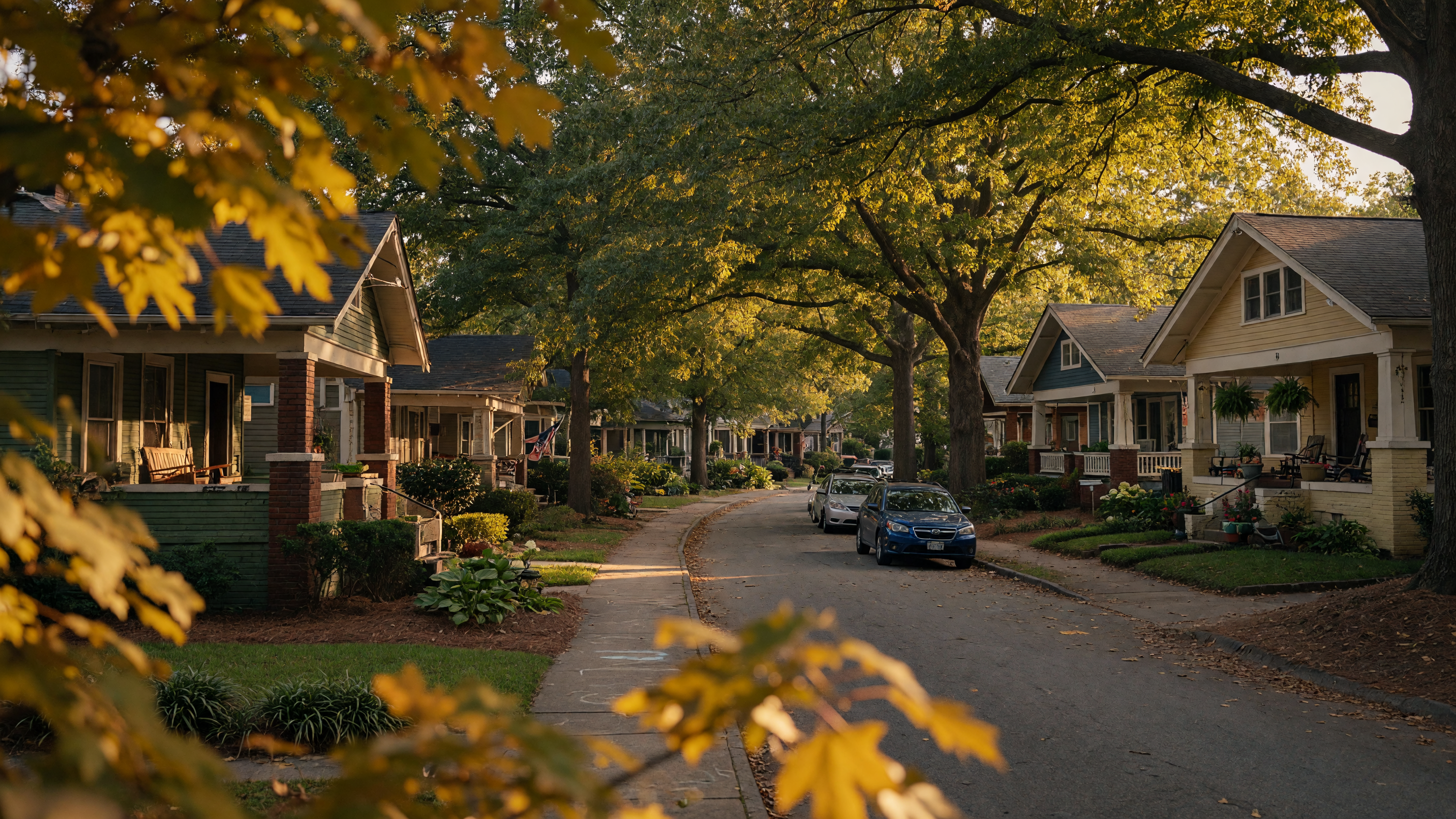
Ormewood Park is the kind of Atlanta neighborhood that newcomers discover by accident and longtime residents never want to leave. Tucked into the southeast corner of the city — bordered by East Atlanta Village to the north, Grant Park to the west, and Boulevard Heights to the south — it offers something increasingly rare inside the Perimeter: a quiet, tree-lined residential neighborhood with genuine suburban character, a tight-knit community, and housing stock that's both charming and affordable by intown standards.
There's no commercial strip, no trendy restaurant row, no BeltLine-adjacent buzz. What Ormewood Park has instead is a canopy of mature oaks shading streets where people walk their dogs, kids ride bikes, and neighbors actually stop to talk. If you're looking for an intown Atlanta neighborhood that feels like a small town, this is it.
The Vibe: Quiet, Residential, and Genuinely Community-Oriented
Ormewood Park's identity is defined as much by what it doesn't have as by what it does. There are no bars, no coffee shops within the neighborhood boundaries, no commercial district competing for foot traffic. What you'll find instead are tree-canopied streets, well-maintained homes with front porches, and a community that organizes itself around shared spaces, neighborhood events, and an annual tradition that captures the spirit of the place: the Ormewood Park Makers Festival.
The neighborhood feels safe, settled, and family-friendly. It attracts a mix of young families drawn by the schools and the quiet streets, professionals who want intown access without the noise, and longtime residents who've been here for decades. The result is a community that feels cohesive without being exclusive — the kind of place where people look out for each other.
That said, Ormewood Park isn't isolated. East Atlanta Village — with its restaurants, live music at The Earl, and the Thursday farmers market — is just a few minutes north. The Southside BeltLine trail connects the neighborhood to Grant Park, Glenwood Park, and the broader trail network. And downtown Atlanta, the Atlanta airport, and the major highways are all within easy reach.
The History: Named for a Prominent Atlanta Family
The neighborhood takes its name from the Orme family, prominent in Atlanta's early development. Aquilla J. Orme was a notable figure in the city's growth, and the land that became Ormewood Park was platted in the early 20th century as a residential suburb.
Like many intown Atlanta neighborhoods, Ormewood Park saw waves of development through the decades. The earliest homes — modest Victorian-era cottages and Craftsman bungalows — were built in the 1910s and 1920s for working- and middle-class families. The neighborhood grew steadily through the mid-century, with additional bungalows, ranch-style homes, and small cottages filling in the streets.
Through the latter decades of the 20th century, like many intown neighborhoods, Ormewood Park experienced periods of disinvestment and decline. But it never lost its residential character, and beginning in the 2000s, a wave of renovation and new interest brought renewed attention. The neighborhood's proximity to East Atlanta Village and the BeltLine — combined with its affordability relative to more hyped intown areas — made it increasingly attractive to buyers seeking character without premium pricing.
Today, Ormewood Park is one of Atlanta's most quietly desirable neighborhoods. The homes have been renovated, the tree canopy is mature and magnificent, and the community is active and engaged. But it remains, by design, a residential neighborhood — and that's exactly what makes it special.
The Tree Canopy: One of Atlanta's Best
If there's one thing that defines Ormewood Park visually, it's the trees. The neighborhood sits under one of the densest tree canopies in intown Atlanta — towering oaks, hickories, and other hardwoods that form a nearly continuous green ceiling over the residential streets. In spring, the canopy fills in and the neighborhood becomes a tunnel of green. In fall, the colors are spectacular. Even in winter, the bare branches create a dramatic architectural framework against the sky.
The tree canopy isn't just aesthetic — it makes a real difference in livability. Summer temperatures on Ormewood Park's shaded streets can be noticeably cooler than in less tree-covered neighborhoods. The canopy also reduces stormwater runoff, supports local wildlife, and contributes to the neighborhood's sense of enclosure and calm.
Housing: Craftsman Bungalows, Cottages, and More
Ormewood Park's housing stock is one of its strongest draws. The neighborhood offers a range of architectural styles that reflect its century of development, all unified by a residential scale and character that feels timeless.
Craftsman Bungalows
The most prevalent home type in Ormewood Park. Built primarily between 1910 and 1940, these one-story frame houses feature front porches, gabled roofs, exposed rafter tails, and the handmade warmth that defines Atlanta's classic bungalow neighborhoods. Most are two to three bedrooms, typically 1,000 to 1,800 square feet, on modest lots shaded by mature trees.
Many Ormewood Park bungalows have been thoughtfully renovated — updated kitchens, new bathrooms, modern mechanical systems — while preserving original details like hardwood floors, built-in cabinetry, beadboard wainscoting, and transom windows. The best of them balance historic character with modern comfort beautifully.
Victorian and Folk Victorian Cottages
Scattered throughout the neighborhood are late 19th-century and early 20th-century cottages — smaller than the grand Victorians in Inman Park or Grant Park but full of charm. These homes feature decorative trim, steeply pitched roofs, and the kind of handcrafted details that new construction rarely replicates.
Mid-Century Ranches
Post-war ranches from the 1940s and 1950s appear throughout the neighborhood, offering wider footprints, lower profiles, and the open floor plans that came with mid-century design. These homes are popular with buyers who want more space and a more modern layout while maintaining the Ormewood Park lifestyle.
New Construction
Select new single-family homes and townhomes have been built in and around Ormewood Park in recent years, particularly on infill lots. These modern homes offer contemporary finishes and energy efficiency at higher price points, blending into the neighborhood's residential scale while providing updated living.
Parks, Trails, and Outdoor Life
Ormewood Park's outdoor offerings are centered on its residential green spaces and its proximity to some of Atlanta's best parks and trails.
Ormewood Park (The Park Itself)
The neighborhood's namesake park is a modest but well-loved green space — a neighborhood park with open lawn, mature trees, and a playground. It's the kind of park where families gather on weekends, kids play on the grass, and the community comes together for informal get-togethers.
Ormewood Dog Park
Located on Delaware Avenue SE, the Ormewood Dog Park is a popular gathering spot for the neighborhood's dog owners. It's a fenced, off-leash area where the community's pets and their owners socialize — one of the many small details that give the neighborhood its community feel.
The Atlanta BeltLine — Southside Trail
The Southside BeltLine trail is open and running right through Ormewood Park's doorstep. The Southeast Trail segments from the Krog Street Tunnel to Boulevard opened in April 2026, and the remaining segments to the south followed in June 2026, completing the roughly 17-mile continuous loop. From the neighborhood, you can now walk or bike all the way to Ponce City Market, Inman Park, or the Westside without crossing traffic. It's been a game-changer for Ormewood Park's accessibility and appeal.
Grant Park
Just west of Ormewood Park, Grant Park offers Atlanta's oldest city park — 130 acres of rolling green space, walking paths, the Atlanta Zoo, and the historic Grant Park Mansion. It's close enough for an easy walk or bike ride and provides the kind of large-scale park experience that complements Ormewood Park's more intimate green spaces.
What's Nearby: East Atlanta Village and Beyond
One of Ormewood Park's strongest selling points is its proximity to East Atlanta Village — one of Atlanta's most beloved neighborhoods. EAV's commercial district, anchored by The Earl and the stretch of Flat Shoals Avenue, is just minutes north. That means Ormewood Park residents enjoy the best of both worlds: the quiet, residential calm of Ormewood Park at home, and the restaurants, live music, farmers market, and shops of EAV when they want energy and activity.
Nearby dining and coffee options include:
The Victorian Atlanta — a plant shop and coffee spot on Glenwood Avenue that perfectly captures the neighborhood-adjacent vibe. Grab a coffee, browse the plants, and enjoy the kind of slow, local experience that defines the area.
Vickery's Glenwood Park — a go-to for Tex-Mex and casual dining just north of the neighborhood on Garrett Street.
Drip Coffee — also on Garrett Street, a solid neighborhood coffee shop for a quick morning stop.
For more extensive dining, nightlife, and shopping, East Atlanta Village, Grant Park, and Glenwood Park are all within a short drive.
Schools and Family Life
Ormewood Park is served by Atlanta Public Schools, and the local schools offer International Baccalaureate (IB) programs that attract families committed to rigorous, globally focused education:
Parkside Elementary — the neighborhood's local elementary school, offering IB programming and serving as a community anchor for young families.
Martin Luther King Jr. Middle School — the neighborhood's middle school option, also offering IB curriculum.
Maynard H. Jackson High School — the local high school with IB programming, named for Atlanta's first Black mayor.
The Atlanta Neighborhood Charter School (middle school campus) is also nearby and has earned attention for its commitment to maintaining a diverse student body — a draw for families who value both academic quality and community representation.
Beyond formal schooling, Ormewood Park's family-friendly character shows up in the everyday: kids riding bikes on quiet streets, families walking to the park, the annual Makers Festival bringing neighbors together.
Community Events: The Makers Festival and More
The Ormewood Park Makers Festival is the neighborhood's signature annual event — a community celebration featuring local artists, craftspeople, food vendors, live music, and neighbors coming together to celebrate the community. It's a perfect snapshot of what makes Ormewood Park special: local, handmade, community-driven, and unhurried.
Beyond the festival, the neighborhood association keeps an active calendar of events — cleanup days, social gatherings, and community meetings that keep residents connected. The Ormewood Park Neighborhood Association website is a resource for staying informed about what's happening in the area.
What Makes Ormewood Park Different
Every Atlanta neighborhood has its own identity, and Ormewood Park's is clear from the moment you drive through it. Here's what sets it apart:
It's genuinely quiet. Not "quiet for intown" — actually quiet. No commercial activity, no through-traffic to speak of, no noise from adjacent nightlife. The soundtrack is birds, wind in the trees, and the occasional neighbor calling out a greeting.
The tree canopy is extraordinary. Among the densest in intown Atlanta. The mature oaks and hardwoods create a sense of enclosure and calm that transforms the streetscape.
It's residential by design. Ormewood Park isn't "emerging" or "up-and-coming" — it's a settled, stable residential neighborhood that values its character. There's no commercial strip to gentrify, no trendy corridor to overdevelop. The neighborhood's identity is its homes, its trees, and its people.
It's community-oriented. The neighborhood association is active, the Makers Festival is beloved, and residents genuinely know and look out for each other. In an era when that kind of community can feel rare, Ormewood Park has it in abundance.
It's intown but feels suburban. That's the magic combination. You're inside the Perimeter with easy access to East Atlanta Village, the BeltLine, Grant Park, and downtown — but you come home to streets that feel like they could be in a small town fifty miles from the city.
What's New in Ormewood Park
The big news is the BeltLine Southeast Trail, which opened in April 2026 and runs right along Ormewood Park's edge. The neighborhood is now fully connected to the loop, with direct trail access to Grant Park, Glenwood Park, and the rest of the network. On the community calendar, the Ormewood Park Makers Festival returns October 10, 2026, and the East Atlanta Strut is just up the road at Brownwood Park on September 26.
Tips for Getting to Know Ormewood Park
Drive through on a Saturday morning. The best way to understand Ormewood Park is to drive or walk its streets on a weekend morning. Watch the canopy, notice the porches, and feel the pace. You'll know quickly if it's for you.
Visit East Atlanta Village first. Since EAV is Ormewood Park's nearest commercial hub, start there. Have coffee at The Victorian Atlanta, grab lunch at one of the Flat Shoals spots, then drive south into Ormewood Park. The contrast between EAV's energy and Ormewood Park's calm is exactly the lifestyle equation that works for many residents.
Walk the streets, not just the main roads. Ormewood Park's character reveals itself on the residential side streets — the tree tunnels, the bungalows, the quiet blocks where neighbors sit on their porches.
Check out the park and dog park. Even if you don't have a dog, the dog park on Delaware Avenue is a window into the community. The regulars there are representative of the neighborhood — friendly, relaxed, and happy to talk about why they love living here.
Attend the Makers Festival. If you're considering a move, timing your visit to coincide with the annual festival will show you Ormewood Park at its best — community, creativity, and neighborly warmth all in one afternoon.
Talk to people. Ormewood Park is a neighborhood where people are happy to share their experience. Strike up a conversation at the dog park, chat with a neighbor on a walk, or attend a neighborhood association meeting. You'll learn more in thirty minutes of conversation than in an hour of online research.
About the Author

Tommy Williams
Tom Will Sell Atlanta · Intown Atlanta Expert
Tommy knows Ormewood Park and the surrounding neighborhoods inside and out. Whether you're exploring the area for the first time or ready to make a move, he can help you navigate the market and find the right home.