
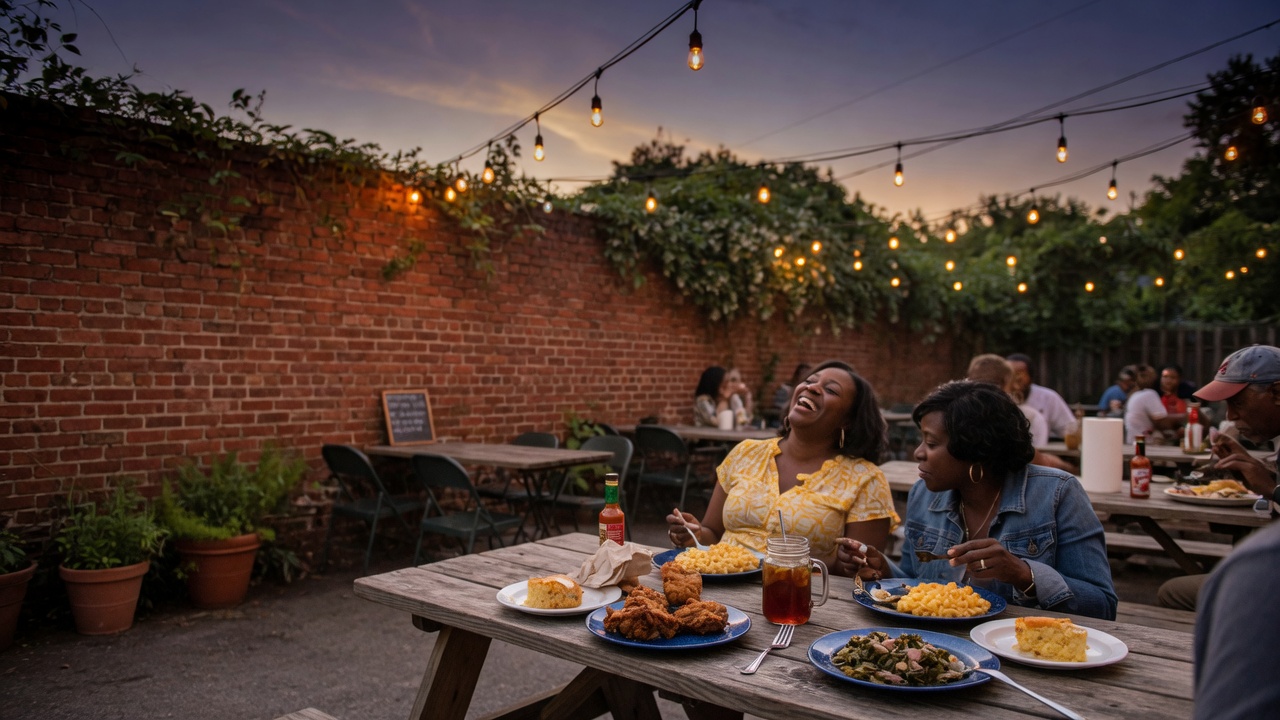
Peoplestown is one of Atlanta's most historically layered neighborhoods — a community that has endured more than most, survived by the strength of its residents, and now stands at the intersection of preservation and progress. Founded in the 1880s, devastated by urban renewal in the 1950s, and rebuilt through decades of community activism, Peoplestown is a neighborhood that rewards those who take the time to understand its story.
Located just south of downtown Atlanta, Peoplestown sits adjacent to Turner Field (now Center Parc Stadium) and the Georgia State University campus, with the Atlanta BeltLine's Southeast Trail running through its eastern edge. It's one of the most accessible intown neighborhoods in the city — close to downtown, connected by transit, and still more affordable than most comparable areas. Here's everything you need to know.
The Vibe: Historic, Resilient, Community-Driven
Peoplestown's identity is inseparable from its history. This is a neighborhood that was literally built by the people who named it — the Peoples family, early landowners who gave the area its name in the late 19th century. That sense of ownership and community pride has persisted through every chapter of the neighborhood's story, including the difficult ones.
Walk through Peoplestown today and you'll see a neighborhood in transition. Tree-lined streets are lined with a mix of early 1900s Craftsman bungalows, Victorian cottages, post-war ranch homes, and newer infill construction. Some blocks feel frozen in time — mature oaks, deep porches, quiet sidewalks. Others show the clear signs of revitalization: freshly renovated homes, new townhomes, and construction sites where vacant lots once stood.
Unlike some of Atlanta's more polished intown neighborhoods, Peoplestown doesn't put on a show. It's a working neighborhood — a place where longtime residents have watched the city change around them and fought to keep their community intact. That resilience is part of the appeal for buyers and renters who value authenticity over aesthetics.
The History: 140 Years of Resilience
Peoplestown's story begins in the 1880s, when the Atlanta Electric Railway line was built along Capitol Avenue, connecting the area to downtown. The Peoples family, early landowners, gave the neighborhood its name, and the area was developed as a streetcar suburb — modest Victorian homes and small lots for working-class families drawn by the new transit connection.
Through the early 1900s, Peoplestown grew steadily. Craftsman bungalows replaced and supplemented the original Victorian cottages, and the neighborhood became a stable, predominantly African American community. Churches, schools, and small businesses formed the backbone of daily life, and the neighborhood's identity was rooted in self-reliance and community institutions.
The most devastating chapter came in 1957, when large-scale urban renewal projects swept through south Atlanta. Hundreds of homes and dozens of businesses in Peoplestown were demolished to clear land for infrastructure and development — a pattern of displacement that disproportionately affected Black communities across the city. The neighborhood lost a significant portion of its housing stock and commercial fabric in a matter of years.
But Peoplestown didn't disappear. Residents organized, advocated, and rebuilt. The Peoplestown Neighborhood Association became a powerful force for community development, fighting for investment, infrastructure, and fair treatment. Over the following decades, the neighborhood slowly rebuilt — not to its original form, but into something new: a community that had been tested by policy and emerged stronger.
In recent years, Peoplestown has faced new pressures. The 2017 sale of Turner Field to Georgia State University, the construction of the BeltLine's Southeast Trail, and the broader wave of intown revitalization have brought new interest and new development to the area. The Skyline Apartments, a large mixed-use project overlooking the BeltLine, is one of the most visible symbols of this change. For longtime residents, the question is whether revitalization can happen without displacement — a tension that defines Peoplestown's present moment.
Turner Field & Georgia State University
Peoplestown's proximity to Turner Field — now Center Parc Stadium — has shaped the neighborhood for decades. When the Atlanta Braves played at Turner Field from 1997 to 2016, the surrounding area saw periodic investment but also game-day congestion and a commercial landscape that catered to visitors rather than residents.
When the Braves departed for Cobb County in 2016, the 68-acre Turner Field site was purchased by Georgia State University in 2017. GSU's plans to redevelop the site into a mixed-use residential and retail district as a southern extension of its campus have significant implications for Peoplestown. The university reached an engagement agreement with neighborhood associations, but many residents remain cautious — watching to see whether the development will benefit existing community members or accelerate the displacement that has already begun.
For buyers and renters, the GSU campus extension represents both opportunity and uncertainty. Property values in the area are likely to appreciate as the campus develops, but the character of the neighborhood may shift in ways that are hard to predict. Understanding this dynamic is essential for anyone considering Peoplestown.
Parks & Green Space
Peoplestown has several parks that serve as community gathering points. D.H. Stanton Park is the neighborhood's primary green space, with a baseball diamond, walking paths, a playground, and a solar-powered sprayground — one of the first energy-neutral splash pads in the city. It's a well-maintained park that reflects the neighborhood's commitment to community infrastructure.
Four Corners Park serves as another recreational hub, housing the Rick McDevitt Youth Center, basketball courts, and a community garden. The park has undergone expansion in recent years, with the city investing in new amenities including playgrounds, dog play areas, and a children's splash pad as part of a broader flood-mitigation greenspace project.
The Atlanta BeltLine's Southeast Trail runs along Peoplestown's eastern edge, providing residents with direct access to the broader network of trails, parks, and neighborhoods connected by the BeltLine. The trail has been a catalyst for new development and increased foot traffic in the area.
Boulevard Crossing Park, just north of the neighborhood, offers additional green space and trail connections, making the area more attractive for buyers who value outdoor access.
Housing in Peoplestown
Peoplestown's housing stock reflects its long history and the disruptions it has weathered. Unlike neighborhoods with a single dominant architectural style, Peoplestown has a mix that spans more than a century.
Victorian Cottages: The oldest homes in Peoplestown, dating to the 1880s and 1890s, are modest Victorian cottages — typically two bedrooms, one bath, with steeply pitched roofs, decorative trim, and the character that comes with 130-plus years of history. These homes are less common than they once were, many lost to mid-century demolition, but the surviving examples are prized for their authenticity.
Craftsman Bungalows: The most common home type, built primarily between 1910 and 1940. These one-story frame houses feature front porches, gabled roofs, and the warm, handmade character that defines Atlanta's older neighborhoods. Most are two bedrooms, 800 to 1,400 square feet, on modest lots. Many have been renovated; others offer opportunities for buyers willing to invest.
Post-War Ranches: Scattered throughout the neighborhood are ranch-style homes from the 1940s and 1950s — lower profiles, wider footprints, and larger lots. These homes offer a different aesthetic and often more interior space than the earlier bungalows.
New Construction & Infill: The most visible change in Peoplestown is the arrival of new townhomes and single-family construction. Modern infill projects, particularly along the BeltLine corridor and near the Turner Field site, offer contemporary finishes and floor plans at higher price points. These homes are reshaping the neighborhood's visual identity and its market positioning.
Apartment Communities: Several apartment buildings and complexes serve the rental market, from older garden-style communities to newer developments. The rental market has been influenced by the arrival of GSU students and young professionals drawn by BeltLine access.
What Makes Peoplestown Different
It's truly intown. Peoplestown is one of the closest neighborhoods to downtown Atlanta — a 10-minute drive to the state Capitol, a short walk to Center Parc Stadium, and directly connected to the BeltLine. Its location makes it one of the most accessible neighborhoods in the city.
It has deep roots. Few Atlanta neighborhoods can claim the depth of history that Peoplestown carries. The community has survived urban renewal, disinvestment, and gentrification pressures — each time emerging with its identity intact, if changed.
It's still affordable. Compared to BeltLine-adjacent neighborhoods like Old Fourth Ward, Inman Park, or even Reynoldstown, Peoplestown offers significantly more accessible pricing. For buyers who want intown access without intown prices, it's one of the best options in the city.
The community fights for itself. Peoplestown's neighborhood association is one of the most active in Atlanta. Residents organize, advocate, and hold developers and city officials accountable. That level of community engagement is rare, and it makes a difference in the quality of life.
What's New in Peoplestown
The neighborhood's transformation is visible on the ground. Switchman Hall at Terminal South is filling in with new food stalls, including Ruki's Kitchen and Te Quiero Tacos, and premiered the ArtWell Farmers Market in August 2026. The BeltLine's Southeast Trail opened in April 2026, putting Peoplestown on the loop with direct trail access. It's a lot of momentum for a neighborhood that was long overlooked.
Tips for Getting to Know Peoplestown
Walk the neighborhood. Peoplestown rewards slow exploration. Walk along Capitol Avenue, Dunning Street, and the residential blocks between the stadium and the BeltLine. You'll see the full range of housing styles and get a feel for the neighborhood's character.
Visit D.H. Stanton Park. The neighborhood's best park — and a good place to meet residents and see the community in action. The sprayground is a popular summer destination.
Check out the BeltLine Southeast Trail. The trail runs through the eastern edge of Peoplestown and connects to the broader BeltLine network. It's a pleasant walk or bike ride and offers a different perspective on the neighborhood.
Stop at Peoples Town Coffee Bar. Located on Milton Avenue, this neighborhood coffee shop is a community gathering point — the kind of place where you can get a feel for the neighborhood's personality over a good cup of coffee.
Talk to residents. Peoplestown is a neighborhood where people are proud of where they live. Strike up a conversation at the park or the coffee shop. You'll learn more in thirty minutes of talking than in an hour of Googling.
About the Author
Tommy Williams
Tom Will Sell Atlanta · Intown Atlanta Expert
Tommy knows Peoplestown and the surrounding south-side neighborhoods inside and out. Whether you're exploring the area for the first time or ready to make a move, he can help you navigate the market and find the right home.