Reynoldstown is one of Atlanta's oldest continuously inhabited African American neighborhoods — and one of the few that still carries the DNA of its founding community. Its story begins not with a developer's blueprint, but with the determination of formerly enslaved people who built a neighborhood from nothing, block by block, house by house, along the railroads that shaped Atlanta's future.
Understanding Reynoldstown's history isn't just an academic exercise. It's the key to understanding why this neighborhood feels the way it does — why the community bonds are so strong, why the architecture is modest but meaningful, and why longtime residents fight so hard to preserve what makes this place special.
Founding: The Railroad Connection (1870s)
In 1870, a group of formerly enslaved people settled on land near the railroad lines east of downtown Atlanta. They were drawn by work — the railroads were Atlanta's economic engine, and they needed laborers. The community they built was named for Madison Reynolds, a prominent early landowner who helped establish the neighborhood.
This was Reconstruction-era Atlanta — a city still rebuilding from the Civil War, still grappling with the social and economic upheaval of emancipation. For Black Atlantans, the railroads offered one of the few reliable sources of employment, even as the work was grueling and the pay was low. Reynoldstown grew up around this labor force, with homes built close to the tracks for easy access to work.
The neighborhood's original streets — Wylie, Chester, Selman, Kenyon — took shape in this era. The homes were simple: shotgun houses, small frame cottages, and modest vernacular structures built by their owners with whatever materials were available. There were no architects, no planning commissions, no building codes. Just people building lives with their hands.
Growth and Self-Reliance (1880s–1940s)
Through the late 19th and early 20th centuries, Reynoldstown grew into a self-sustaining community. Despite the constraints of Jim Crow laws and segregation, residents built the institutions that made the neighborhood function: churches, mutual aid societies, small businesses, and community organizations.
The neighborhood was never wealthy, but it was resilient. Residents owned their homes — a significant achievement in an era when Black homeownership was actively discouraged. The streets were lined with fruit trees and vegetable gardens. Neighbors shared resources, watched each other's children, and maintained a social fabric that held the community together through decades of economic hardship.
The Reynoldstown Civic Improvement League, one of the neighborhood's oldest community organizations, was founded during this period. It became the primary vehicle for collective action — advocating for infrastructure, fighting for services, and organizing the community events that gave residents a sense of belonging and pride.
The Wheelbarrow Festival: A Community Tradition
One of the most distinctive traditions in Reynoldstown is the Wheelbarrow Festival, held annually at Lang Carson Park. The festival's name reflects the neighborhood's working-class roots — wheelbarrows were the tool of choice for the railroad laborers and construction workers who built Reynoldstown.
The festival is a community celebration — music, food, games, and a wheelbarrow race that has become the neighborhood's signature event. It's been held for decades, and it remains one of the most genuine neighborhood traditions in Atlanta. There's no corporate sponsorship, no Instagram influencers, no PR campaign. Just neighbors celebrating the place they call home.
Challenges: Highways, Disinvestment, and Change (1950s–1990s)
Like many Black neighborhoods in American cities, Reynoldstown was battered by the forces of mid-20th-century urban policy:
Interstate construction. The completion of Interstate 20 in the 1960s cut through the southern edge of Reynoldstown, severing the neighborhood from Grant Park and creating a physical barrier that disrupted connections to the broader city. Highway construction was a pattern repeated in Black neighborhoods across Atlanta and America — a deliberate or indifferent destruction of established communities in the name of progress.
Disinvestment. As white flight accelerated and suburban development drew resources away from intown neighborhoods, Reynoldstown experienced the familiar cycle of declining property values, deferred maintenance, and reduced city services. The homes that had been proudly maintained for generations began to show the wear of decades of neglect.
The crack epidemic. The 1980s and early 1990s brought the crack epidemic to Reynoldstown, as it did to neighborhoods across Atlanta. Drug-related crime increased, and the neighborhood's reputation suffered. For a period, Reynoldstown was considered one of Atlanta's rougher areas — a reputation that didn't reflect the resilience of the residents who stayed.
Through all of this, the community endured. The Civic Improvement League continued to meet. The Wheelbarrow Festival continued to happen. Neighbors continued to look out for each other. The social fabric held, even when the physical infrastructure frayed.
Recognition: The National Register (2003)
In April 2003, Reynoldstown was officially listed on the National Register of Historic Places as the Reynoldstown Historic District. The designation recognized the neighborhood's architectural significance — particularly its collection of shotgun houses and early 20th-century bungalows — and its historical importance as one of Atlanta's oldest African American communities.
The National Register listing was a milestone. It provided a framework for preservation, offered potential tax incentives for restoration, and gave the neighborhood a formal recognition of what residents had always known: Reynoldstown's history matters.
The BeltLine Era and New Energy (2010s–Present)
The opening of the Atlanta BeltLine Eastside Trail along Reynoldstown's western border changed the neighborhood's trajectory. The trail brought foot traffic, visibility, and a new connection to the rest of the city. Properties near the trail saw immediate appreciation, and the neighborhood's proximity to the BeltLine made it attractive to a new generation of residents.
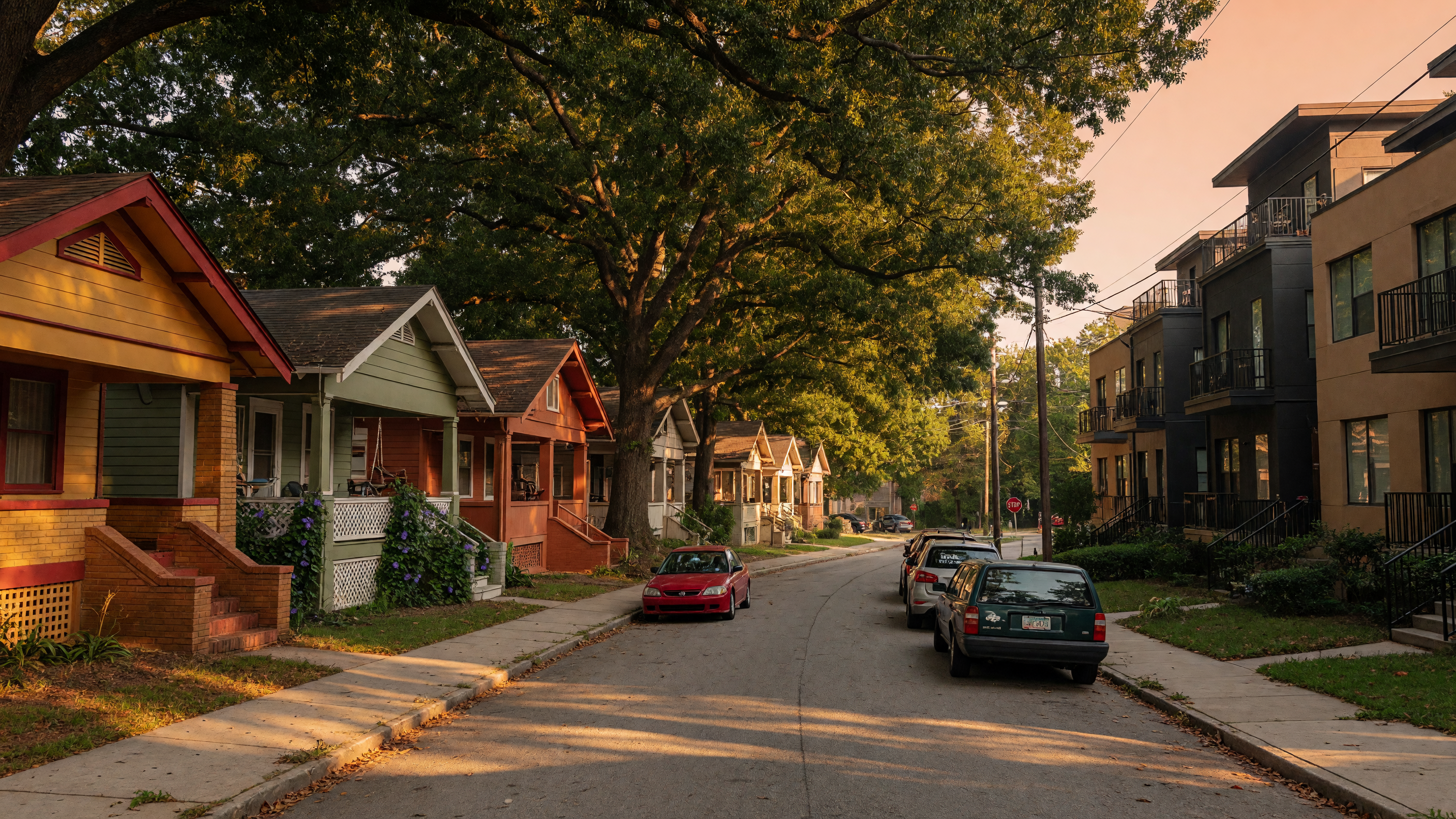
New construction followed. Townhomes and modern single-family homes began appearing on infill lots, particularly near the trail. The aesthetic of the new development varies — some projects reference the neighborhood's bungalow heritage, while others embrace a contemporary look. The mix of old and new is part of Reynoldstown's current identity: a neighborhood where 120-year-old shotgun houses sit alongside five-year-old townhomes.
The neighborhood has also benefited from the broader revitalization of Atlanta's east side. As nearby areas like Cabbagetown, Edgewood, and East Atlanta have become more popular, Reynoldstown has attracted residents who want proximity to these amenities without the premium prices of more established neighborhoods.
Reynoldstown Today
Reynoldstown today is a neighborhood balancing growth with preservation. The community is more diverse than it was a decade ago — in income, in age, in background — but the core identity remains. The Civic Improvement League is active. The Wheelbarrow Festival still happens. The shotgun houses still stand. And the sense of community that was forged in the 1870s along the railroad tracks is still the neighborhood's most valuable asset.
For potential residents, Reynoldstown offers something rare: a neighborhood with genuine history, real community, and a location that's connected to everything Atlanta has to offer — without the polish or pretension that comes with more developed areas. It's not perfect, and it's still evolving. But that's part of what makes it worth knowing.
About the Author

Tommy Williams
Tom Will Sell Atlanta · Intown Atlanta Expert
Tommy is passionate about Atlanta's neighborhood history and the stories that make each community unique. He's helped clients buy and sell homes throughout Reynoldstown and the east side, and he understands the context behind every block.