
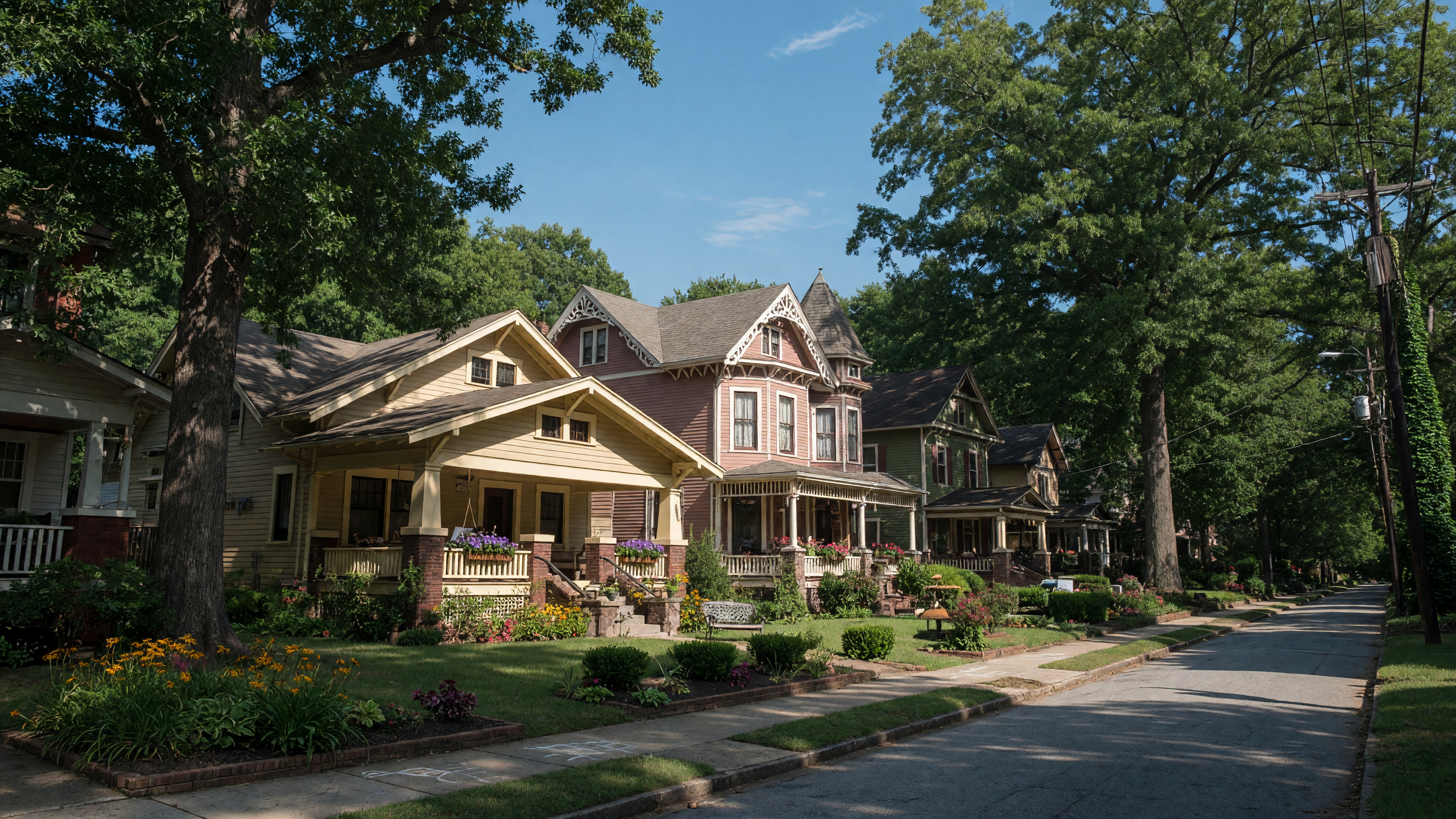
West End is one of Atlanta's oldest and most historically significant neighborhoods — a place where over a century of Black education, culture, and community has created a neighborhood unlike anywhere else in the city. Located southwest of downtown, it's a community that has shaped Atlanta's identity in ways that extend far beyond its borders.
Today, West End is in the middle of a revitalization that has brought new energy, new businesses, and new residents to a neighborhood that has always had deep roots. The Westside BeltLine trail runs through it, Lee + White has become a destination for food and craft beer, and the AUC campus continues to anchor the area with intellectual and cultural life. If you're looking for a neighborhood with genuine history and real momentum, West End deserves your attention.
What Makes West End Special
West End isn't like the flashier intown neighborhoods that dominate Atlanta's social media feeds. It doesn't have the restaurant density of Inman Park, the nightlife of East Atlanta, or the skyline views of Midtown. What it has is something harder to manufacture: authenticity.
This is a neighborhood that has been continuously inhabited since the 1830s — before Atlanta was even incorporated as a city. It was one of the first areas in Atlanta where Black families owned homes, established churches, and built institutions. The Atlanta University Center, a consortium of historically Black colleges and universities including Clark Atlanta University, Morehouse College, and Spelman College, has been a cornerstone of the community since the late 1800s.
The result is a neighborhood with a sense of place that you feel the moment you arrive. The streets are lined with mature trees and historic homes. The porches are wide. The pace is slower. And the history is everywhere — in the Wren's Nest, in the AUC campuses, in the churches and community organizations that have held this neighborhood together for generations.
The Wren's Nest
The Wren's Nest is West End's most famous landmark — the Victorian home where author Joel Chandler Harris lived from 1883 until his death in 1908. Harris is best known for his Uncle Remus stories, which drew on African American folktales collected in the rural South. The house has been preserved as a house museum and is one of Atlanta's oldest house museums.
The Wren's Nest sits on Ralph David Abernathy Boulevard, the main commercial corridor through West End, and its distinctive Queen Anne architecture makes it impossible to miss. The museum offers tours, hosts community events, and serves as a physical anchor for West End's identity as a neighborhood shaped by storytelling and cultural preservation.
The AUC Campus
The Atlanta University Center (AUC) is the largest consortium of historically Black colleges and universities in the nation. It includes Clark Atlanta University, Morehouse College, Spelman College, the Morehouse School of Medicine, and the Interdenominational Theological Center. The campus occupies a significant portion of West End's footprint and gives the neighborhood an energy that's unlike any other residential area in Atlanta.
During the school year, the campus brings thousands of students, faculty, and visitors to the area. There's a vibrancy to it — students walking between classes, cultural events and lectures open to the public, Greek life traditions that have produced some of America's most influential leaders. The AUC is not just an educational institution; it's the cultural heartbeat of West End.
The Westside BeltLine Trail
The Westside BeltLine trail has been a catalyst for West End's revitalization. Running through the neighborhood's eastern edge, the trail connects West End to the broader BeltLine network — linking it to the Westside Park, the Westside Reservoir, and eventually to the rest of Atlanta's 22-mile loop.
The trail has brought new investment, new residents, and a new sense of possibility to West End. Walkers, runners, and cyclists use the trail daily, and the areas around trail access points have seen new development — apartments, townhomes, and commercial spaces that are filling in what was once underutilized land.
For residents, the BeltLine is more than recreation — it's connectivity. It links West End to neighboring areas like Westview and Ashview Heights, and it provides a direct, car-free path to some of the city's best parks and public spaces.
Housing Styles and Architecture
West End's housing stock is one of its greatest assets. The neighborhood has a remarkable collection of late 19th and early 20th-century architecture that reflects its long history:
Victorian Homes
West End has some of Atlanta's finest Victorian homes — Queen Anne, Folk Victorian, and Eastlake-style houses with ornamental woodwork, wraparound porches, turrets, and the kind of detail that simply isn't built anymore. Many of these homes have been lovingly restored and are listed on the National Register of Historic Places.
Price range: Restored Victorian homes typically sell for $450,000–$800,000, with premium properties exceeding that range.
Craftsman Bungalows
The early 20th century brought Craftsman bungalows to West End — wider, lower homes with deep front porches, exposed rafter tails, and the warm, handcrafted details that define the style. These homes are popular with young families and professionals who want character with practicality.
Price range: Renovated Craftsman bungalows typically sell for $350,000–$550,000.
Shotgun Houses and Folk Cottages
Scattered throughout West End are smaller frame houses — shotgun houses and folk cottages built for working-class families in the early 1900s. These compact homes, typically one to two bedrooms, have become increasingly popular with buyers who value affordability and historic character.
Price range: Renovated shotgun houses and cottages typically sell for $250,000–$400,000.
Modern Construction
New construction has arrived in West End, particularly near the BeltLine corridor and along major corridors. Modern townhomes, duplexes, and single-family homes are being built on infill lots and as part of larger developments, offering contemporary design at price points that reflect the neighborhood's rising profile.
Price range: New construction townhomes typically start around $400,000 and can exceed $700,000 for larger single-family homes.
Dining and Culture
West End's dining scene is growing, driven in large part by the Lee + White development on White Street. Lee + White is a mixed-use complex that has become a destination for food, craft beer, and community events. It's home to Wild Heaven Beer, one of Atlanta's most respected craft breweries, along with a growing roster of restaurants, cafes, and retail.
Beyond Lee + White, West End's dining options reflect the neighborhood's character: Portrait Coffee on Ralph David Abernathy Boulevard is a community-focused coffee shop with excellent espresso and a welcoming atmosphere. West End Soul Food serves the kind of home cooking that has sustained the neighborhood for decades. And the Afröcafé on Lee Street offers a unique blend of coffee and African-inspired fare.
For more options, the BeltLine and adjacent neighborhoods — Westview, Ashview Heights, and the Westside — are filling in with restaurants, bars, and cafes that serve the growing population on Atlanta's west side.
Parks and Green Space
West End benefits from its proximity to some of Atlanta's best green spaces. Westside Park, Atlanta's largest park, sits just to the northwest — a 280-acre green space built around the Bellwood Quarry and the Westside Reservoir, with trails, overlooks, and views of the city skyline. Atlanta's BeltLine Westside Trail itself functions as a linear park, with public art installations, gathering spaces, and continuous trail access.
Within the neighborhood, Merritts Park and several smaller green spaces provide places to walk, exercise, and gather. The tree canopy throughout West End is mature and dense, giving the residential streets a park-like feel that's particularly striking in spring and fall.
What Makes West End Attractive to Buyers
West End is attracting a growing number of buyers who recognize what it offers:
Value relative to other intown neighborhoods. West End's home prices are lower than comparable historic neighborhoods on the east side — Inman Park, Virginia-Highland, Cabbagetown — which means buyers can get more house, more land, and more history for their money.
Genuine community. West End has organizations, institutions, and traditions that go back generations. The AUC, the West End Neighborhood Development organization, the Wren's Nest, and the churches and community groups that anchor the area create a sense of belonging that newer neighborhoods can't replicate.
BeltLine access and ongoing investment. The Westside BeltLine trail has brought infrastructure, visibility, and momentum to West End. The trail will eventually connect to the full 22-mile loop, and the investment around trail access points continues to grow.
Historic architecture. For buyers who love Victorian homes and Craftsman bungalows, West End has some of the best examples in Atlanta — at price points that make ownership possible for a wider range of buyers than the east side.
What's New in West End
West End's food scene took a big step forward in March 2026 when Eats, the city's iconic meat-and-three, reopened inside Wild Heaven Brewery at Lee + White, and El Tesoro opened its largest location yet in the same complex. On the green space side, the Enota Park expansion along the Westside Trail is opening in phases through fall 2026, turning a small playlot into an eight-acre park with a lawn, boardwalk, performance pavilion, and splash pad. West Fest returns in mid-October, and the neighborhood's momentum shows no signs of slowing.
Tips for Getting to Know West End
Walk Ralph David Abernathy Boulevard. This is the neighborhood's main corridor, and it tells the story of West End — historic storefronts, community organizations, churches, and the Wren's Nest. It's not polished, but it's real.
Visit Lee + White. It's the most active commercial space in West End and the best place to get a sense of the neighborhood's new energy. Grab a beer at Wild Heaven, try a new restaurant, and see the development for yourself.
Spend time on the BeltLine Westside Trail. Walk or bike the trail to get a sense of the neighborhood's geography, its connection to Westside Park, and the development happening along the corridor.
Explore the AUC campus. Even if you're not a student, the campus is worth visiting. The libraries, galleries, and public events are open to the community, and the energy during the school year is palpable.
Talk to residents. West End is a neighborhood where people are happy to share their stories. Strike up a conversation at a coffee shop or on the trail, and you'll quickly understand why people who live here love it.
About the Author

Tommy Williams
Tom Will Sell Atlanta · Intown Atlanta Expert
Tommy has extensive knowledge of West End and Atlanta's west side neighborhoods. He can help you navigate the area's unique housing market and find the right property — whether you're buying, selling, or just exploring your options.