West End is one of Atlanta's oldest neighborhoods — and one of its most historically significant. Founded in the 1830s as a crossroads settlement on the western edge of what would become Atlanta, it has been a center of Black education, culture, and community for over 150 years. The story of West End is, in many ways, the story of Black Atlanta itself.
The 1830s–1860s: Origins as a Crossroads Settlement
West End predates the city of Atlanta. In the 1830s, the area that would become West End was a crossroads settlement at the intersection of several early roads leading out of what was then Marthasville. White settlers established homes, farms, and businesses along these roads, and the area grew as a small but distinct community on Atlanta's western fringe.
The neighborhood's name — "West End" — reflected its geographic position relative to downtown Atlanta. As Atlanta grew in the decades before the Civil War, West End became known for its large homes, tree-lined streets, and affluent white residents. The arrival of the Atlanta and West Point Railroad in the 1850s brought further development and connectivity, linking the area to broader regional trade networks.
During the Civil War, West End saw the destruction that visited much of Atlanta. Sherman's March to the Sea in 1864 left the area scarred, and the post-war years brought radical change — not just in the physical landscape, but in who lived there and how the community was defined.
The 1870s–1900s: The Rise of Black West End
The most transformative period in West End's history began in the years after the Civil War, when formerly enslaved people and free Black families began establishing themselves in the area. The founding of the Atlanta University Center — originally Atlanta University, established in 1865 — brought Black higher education to the neighborhood and laid the groundwork for what would become one of the most important concentrations of Black intellectual and cultural life in America.
Over the next several decades, a succession of historically Black institutions established themselves in and around West End: Morehouse College (founded 1867), Spelman College (founded 1881), Clark University (founded 1888), and others. The Atlanta University Center, the consortium that now connects these institutions, became the anchor of Black intellectual life in the South.
As the AUC grew, so did the Black community around it. Black professionals, educators, ministers, and families settled in West End, building homes, churches, and community organizations. The neighborhood became a center of Black middle-class life — a place where education, culture, and civic engagement were woven into the fabric of daily life.
By the turn of the 20th century, West End was one of Atlanta's most prominent Black neighborhoods. Its churches — including Wheat Street Baptist Church and Big Bethel AME Church — were centers of community life. The commercial corridor along what is now Ralph David Abernathy Boulevard served the neighborhood's growing population with shops, restaurants, and services.
The Wren's Nest and Joel Chandler Harris
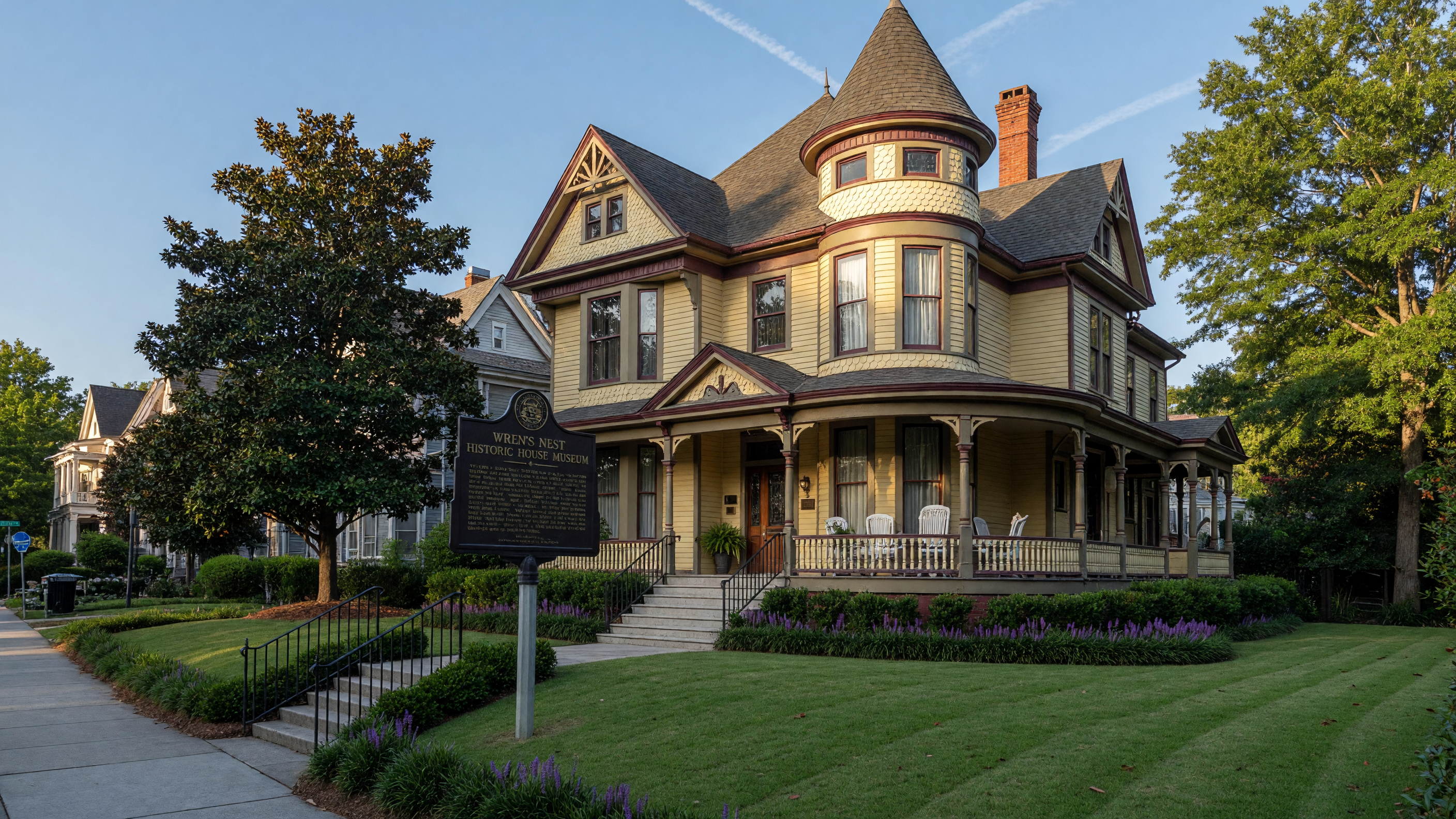
One of West End's most famous landmarks is the Wren's Nest, the Victorian home where author Joel Chandler Harris lived from 1883 until his death in 1908. Harris, a white journalist and author, is best known for his Uncle Remus stories — a collection of African American folktales that he recorded and published in dialect.
The Wren's Nest is significant not just as a literary landmark but as a symbol of the complex cultural intersections that defined West End. Harris's work drew directly on the oral traditions of Black storytellers in the rural South, and his home sat in the heart of what was becoming Atlanta's most important Black neighborhood. The house was saved from demolition in the 1920s and has operated as a house museum since 1913 — making it one of Atlanta's oldest house museums.
Today, the Wren's Nest serves as a community space and cultural venue, hosting events, tours, and programs that connect the neighborhood's past to its present.
The 1920s–1960s: Growth, Segregation, and Civil Rights
The early 20th century brought continued growth to West End. The neighborhood expanded with new construction — Craftsman bungalows, shotgun houses, and larger family homes built for a growing Black middle and working class. The AUC continued to grow, and the commercial corridors along Ralph David Abernathy Boulevard and Lee Street thrived.
But West End, like all Black neighborhoods in Atlanta, operated under the constraints of Jim Crow segregation. Black residents were denied access to many public services, excluded from white neighborhoods, and subjected to the economic and social limitations that defined life in the segregated South. Despite these barriers, West End's community organizations, churches, and schools provided the structure and support that sustained the neighborhood.
The civil rights movement of the 1950s and 1960s had deep roots in West End. The AUC campuses were centers of student activism — students from Morehouse, Spelman, and Clark Atlanta organized sit-ins, voter registration drives, and marches that helped shape the national civil rights movement. Ralph David Abernathy, the civil rights leader and close associate of Martin Luther King Jr., lent his name to the neighborhood's main commercial corridor, which was renamed in his honor.
The 1970s–2000s: Disinvestment and Preservation
The decades following the civil rights era brought challenges to West End. White flight, suburbanization, and disinvestment hit many of Atlanta's older neighborhoods hard, and West End was no exception. Population declined, businesses closed, and some of the neighborhood's historic homes fell into disrepair.
But West End's institutions held firm. The AUC continued to educate generations of Black leaders, and community organizations worked to preserve the neighborhood's housing stock and historic character. In the 1980s and 1990s, preservation efforts intensified — the West End Historic District was listed on the National Register of Historic Places, protecting the neighborhood's architectural heritage from demolition and uncontrolled development.
The National Register listing recognized what residents had long known: West End's collection of Victorian, Folk Victorian, and Craftsman homes was architecturally significant and historically irreplaceable. The protections that came with the listing ensured that the neighborhood's physical character would survive even as its demographics and economy continued to evolve.
The 2010s–Present: Revitalization and the BeltLine
The most recent chapter in West End's history has been defined by revitalization — driven in part by the Westside BeltLine trail, which opened through the neighborhood and connected West End to Atlanta's growing network of trails, parks, and mixed-use development.
The BeltLine brought new visibility and new investment to West End. The Lee + White development on White Street — a mixed-use complex featuring Wild Heaven Beer, restaurants, retail, and event space — became a destination for the broader west side community. New residential development, including townhomes and apartments near the trail, attracted young professionals and families looking for intown living at more accessible price points.
But revitalization in West End has also raised important questions about equity and displacement. As property values rise and new development transforms the neighborhood, long-time residents and community organizations are working to ensure that West End's history and its existing community are not erased in the process. Organizations like the West End Neighborhood Development association and the Atlanta University Center continue to advocate for inclusive growth that honors the neighborhood's legacy.
Today, West End stands at an inflection point. It is a neighborhood with deep roots and genuine momentum — a place where the past and the future coexist in ways that are both complex and compelling. For buyers and renters willing to invest in a neighborhood with real history and real promise, West End offers something that few Atlanta neighborhoods can match.
About the Author
Tommy Williams
Tom Will Sell Atlanta · Intown Atlanta Expert
Tommy has deep knowledge of West End's history and its housing market. Whether you're drawn to the neighborhood's historic architecture or its revitalization story, he can help you navigate the unique dynamics of buying or selling in West End.