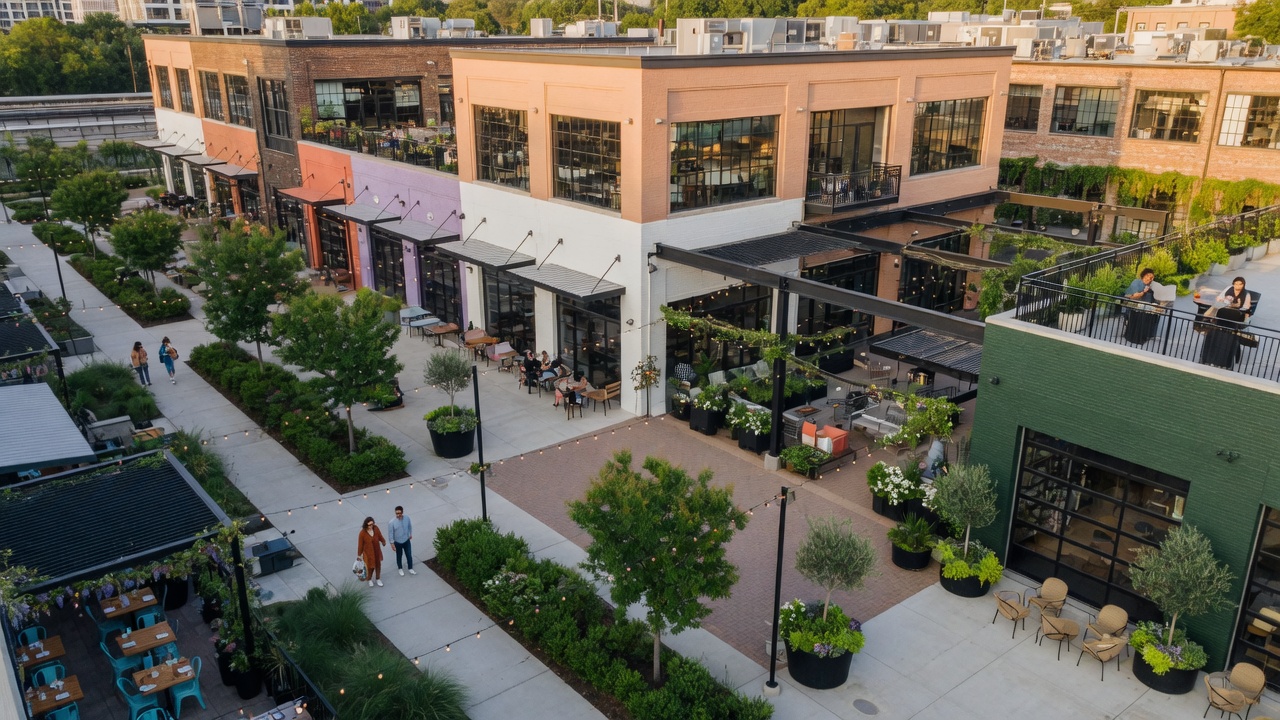
West Midtown's real estate market is one of the most dynamic in Atlanta. The district's transformation from an industrial corridor into a $1.5-billion mixed-use hub has created a housing landscape unlike anything else in the city — luxury condos in sleek mixed-use developments, converted warehouse lofts with original brick and steel, brand-new townhomes, and adaptive-reuse residences that blend historic character with modern amenities.
This guide covers the housing styles, price ranges, market dynamics, and practical advice for anyone considering buying or renting in Atlanta's most exciting neighborhood.
Housing Styles: What's Available in West Midtown
West Midtown's housing stock is distinctive because it doesn't follow the traditional Atlanta pattern of historic bungalows and Victorian homes. Instead, the district offers a mix of adaptive-reuse properties, purpose-built luxury developments, and new construction that reflects its industrial heritage and forward-looking identity.
Luxury Condos in Mixed-Use Developments
The most visible segment of West Midtown's housing market is the luxury condo — typically located within large mixed-use developments like The Interlock and Star Metals. These residences offer a full-service urban living experience: modern finishes, floor-to-ceiling windows, rooftop access, fitness centers, co-working spaces, and immediate access to restaurants, retail, and entertainment.
Condos in these developments typically range from $350K to $800K+, depending on size, floor level, and views. Studios and one-bedrooms start in the mid-$300Ks, while larger two- and three-bedroom units with premium finishes can exceed $800K. The amenities and walkability factor command a premium over comparable units in less developed areas.
Converted Warehouse Lofts
West Midtown's industrial past lives on in its converted warehouse lofts — residences that retain the exposed brick, steel beams, concrete floors, and high ceilings of their original buildings. These properties appeal to buyers who want character and authenticity in a home — spaces that feel genuinely different from standard new construction.
Warehouse lofts in West Midtown typically range from $300K to $600K, with prices depending on the building, unit size, and level of renovation. Some of the most desirable lofts are in smaller, boutique conversions that offer more privacy and a tighter community feel than the larger mixed-use developments.
New-Construction Townhomes
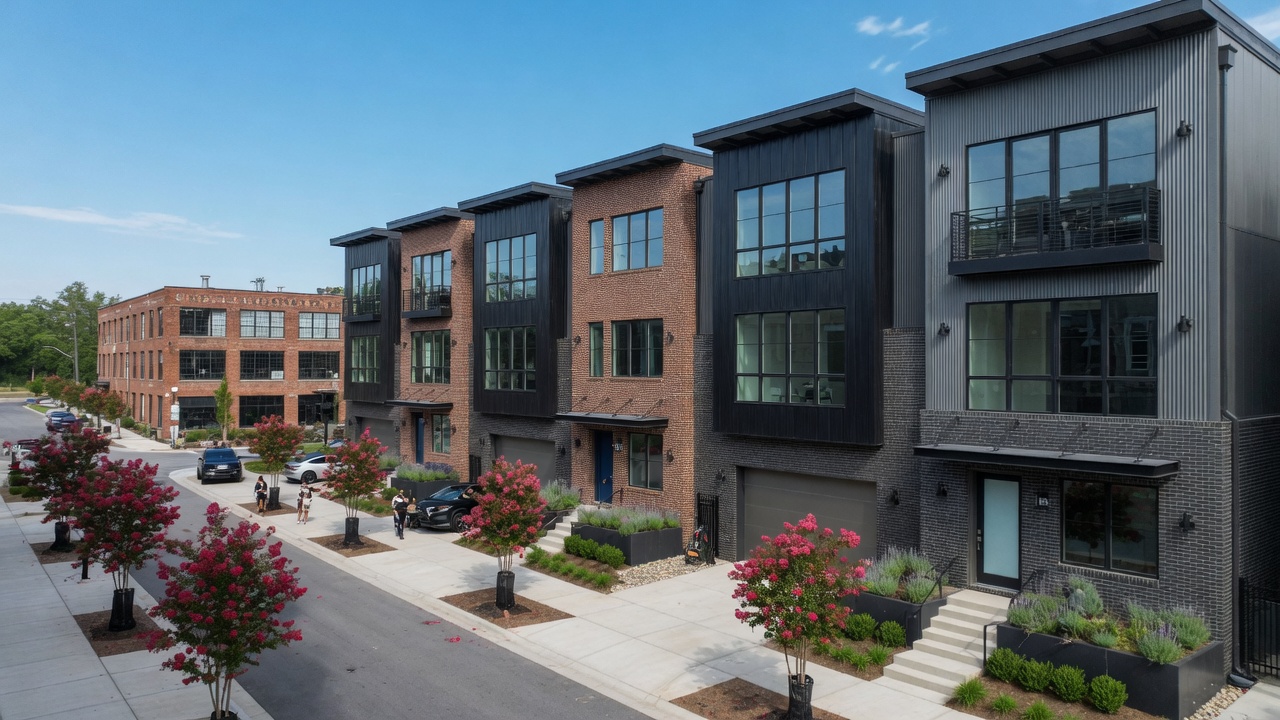
The newest addition to West Midtown's housing stock is the modern townhome — three-story residences with clean lines, attached garages, rooftop decks, and contemporary finishes. These are primarily found in new developments near Blandtown, along the edges of the commercial corridor, and in pocket developments scattered throughout the district.
New townhomes in West Midtown typically list from $450K to $750K, with price reflecting square footage, finishes, and location. The most premium units — those closest to the commercial corridor or with rooftop skyline views — command the highest prices.
Adaptive-Reuse Residences
A growing category in West Midtown is the adaptive-reuse residence — individual units within larger industrial buildings that have been converted to residential use. These might be former factory buildings, warehouses, or commercial structures that now house a mix of lofts, condos, and apartments. They offer the industrial aesthetic of warehouse lofts with the community feel of a smaller building.
Adaptive-reuse residences typically range from $275K to $550K, making them one of the more accessible entry points into the West Midtown market.
Price Ranges at a Glance
The Rental Market
West Midtown's rental market is just as active as its for-sale market — and in some ways, more dynamic. The district's luxury apartment buildings at Star Metals (Stella), The Interlock, and other developments offer a range of options from studios to two-bedroom units, with amenities that include rooftop pools, fitness centers, co-working spaces, and concierge services.
Rental rates in West Midtown's luxury buildings typically range from $1,800 to $3,500+ per month, with studios and one-bedrooms in the lower range and larger units with premium finishes at the top. The rental market is particularly strong among young professionals and Georgia Tech affiliates who want walkable, amenity-rich living without the commitment of ownership.
Older buildings and smaller conversions offer more affordable options, with one-bedrooms typically starting around $1,400 to $1,800 per month.
What Makes the West Midtown Market Unique
The mixed-use advantage. Unlike traditional residential neighborhoods, West Midtown's housing is integrated with commercial, retail, and entertainment uses. Living here means your coffee shop, your restaurant, your gym, and your office might all be within walking distance — or in the same building. That convenience commands a premium, but it also delivers genuine lifestyle value.
Ongoing development. West Midtown is still actively developing. New projects are announced regularly, and the district's infrastructure — including the BeltLine Westside Trail expansion — continues to improve. Early buyers in newer developments have seen significant appreciation as the area matures.
The Georgia Tech factor. Proximity to Georgia Tech creates steady demand for both rentals and purchases. The university's expansion into the area has brought research facilities, student housing, and a constant flow of young talent that keeps the market active.
Fall 2026 snapshot. The 30318 ZIP's median sale price has been running in the $375,000–$425,000 range depending on the month and mix, with price per square foot around $225. The market has cooled from its post-2022 peak: homes take a bit longer to sell and buyers have more negotiating room, but the district's fundamentals, new development, and BeltLine connections keep long-term demand intact.
Industrial character has a ceiling. West Midtown's aesthetic is deliberately industrial — exposed brick, concrete, steel. This appeals strongly to a specific buyer but may not resonate with everyone. It's worth spending time in the neighborhood before committing to ensure the vibe matches your preferences.
HOA fees and building assessments. Condos and lofts in mixed-use developments often carry higher HOA fees than comparable properties elsewhere — typically $300 to $800+ per month — to cover the amenities, maintenance, and shared infrastructure these buildings require. Factor this into your monthly budget.
Buyer Tips: What to Know Before You Buy in West Midtown
Understand the building before you buy the unit. In a market dominated by condos and lofts, the building's financial health, reserve fund, management quality, and HOA rules matter as much as the individual unit. Request the HOA financials, meeting minutes, and reserve study before making an offer.
Consider noise and proximity. West Midtown is a mixed-use district — that's its appeal, but it also means you may be living above or next to restaurants, bars, or retail. Visit your prospective unit at different times of day, including weekends and evenings, to assess noise levels.
Think about parking. While West Midtown is walkable, car ownership is still common in Atlanta. Understand what parking is included with your unit — many buildings offer garage parking, but the number of spaces and cost varies. Street parking can be competitive near the commercial corridor.
Watch the BeltLine expansion. The Westside Trail's continued development will increase connectivity and potentially drive further appreciation. Properties near future trail access points may see outsized gains as the network expands.
Get pre-approved and move fast. Well-priced units in desirable West Midtown buildings attract multiple offers. A pre-approval letter and the ability to move quickly are essential in this market.
Work with someone who knows the district. West Midtown's real estate market is different from traditional Atlanta neighborhoods. The mix of condo, loft, townhome, and adaptive-reuse properties — each with its own building dynamics, HOA structures, and market considerations — requires an agent who understands the nuances.
Is West Midtown the Right Neighborhood for You?
West Midtown is ideal for buyers and renters who want a walkable, amenity-rich, urban lifestyle in a neighborhood with genuine character and constant energy. It's particularly well-suited for young professionals, creatives, Georgia Tech affiliates, and anyone who values dining, design, and community over quiet suburban streets.
It's not the right fit for everyone. The industrial aesthetic, higher density, and mixed-use noise profile won't appeal to buyers seeking traditional suburban calm. And the HOA fees and building assessments add to the cost of ownership beyond the purchase price.
But for the right buyer, West Midtown offers something genuinely rare in Atlanta: a walkable, food-forward, design-driven neighborhood with a sense of identity that's still being written. The district is evolving quickly, and buying in now means being part of its next chapter.
Ready to explore West Midtown's real estate market? Whether you're buying, selling, or just curious about what's available, I'd love to help you navigate the district.
Talk to TommyAbout the Author

Tommy Williams
Tom Will Sell Atlanta · Intown Atlanta Expert
Tommy knows West Midtown's evolving market — from the premium condos at The Interlock to the adaptive-reuse lofts tucked into former warehouses. Let him help you find the right property in one of Atlanta's most exciting districts.