
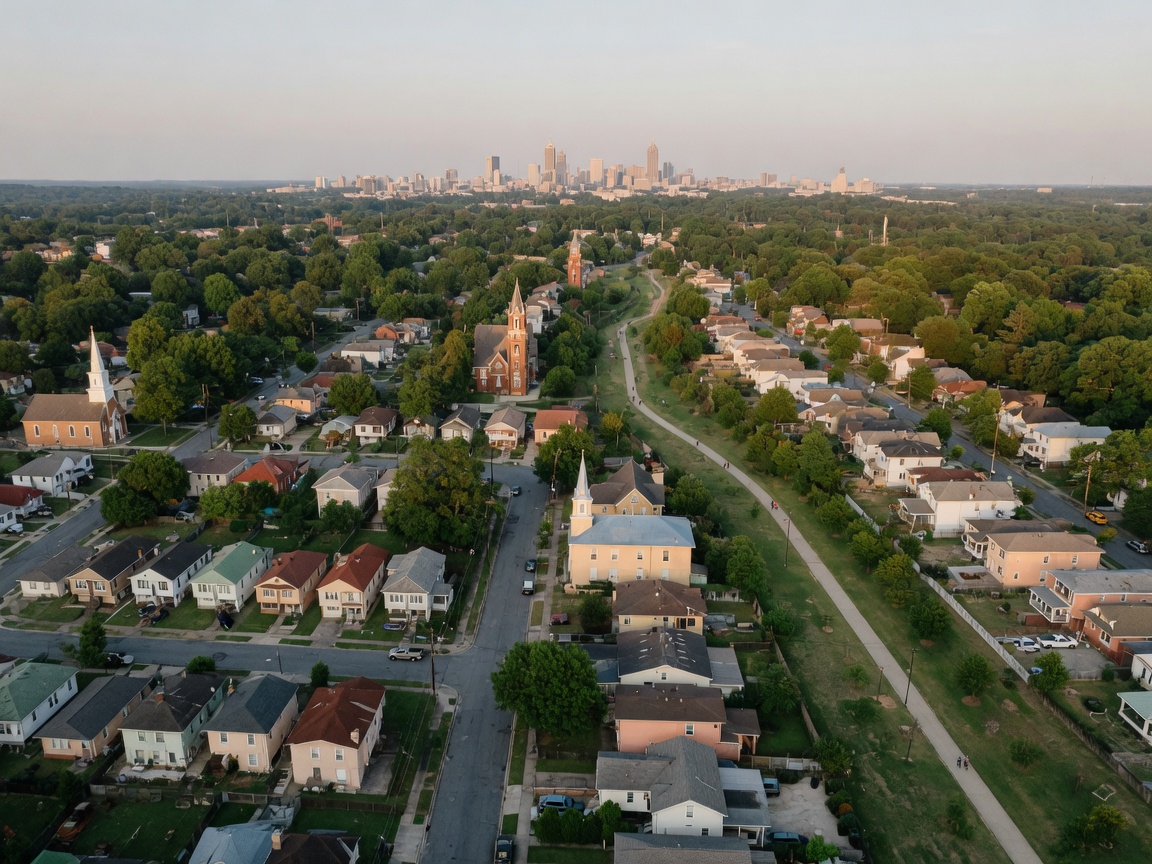
Westview is one of Atlanta's quieter historic neighborhoods — a place whose story has unfolded more slowly than the flashier intown districts but with a depth that rewards attention. Founded at the turn of the 20th century as a streetcar suburb on Atlanta's southwestern edge, Westview has spent more than a century building a community defined by architectural variety, neighborhood pride, and a resilience that has kept it intact through decades of change.
The Turn of the Century: A Streetcar Suburb Is Born
Westview's origins trace to the early 1900s, when Atlanta's expanding streetcar network made it possible for middle-class families to live outside the city's congested core. The area that would become Westview was platted as a residential suburb, with streets designed for walking, generous lot sizes, and a mix of housing styles that reflected the architectural trends of the era.
Originally known as part of the broader West End Park area, the neighborhood was formally annexed into the City of Atlanta by 1910. The streetcar line along what is now Ralph David Abernathy Boulevard provided the connection to downtown, and the neighborhood grew steadily in the decades that followed. Craftsman bungalows, American Foursquares, and early Tudor Revival homes filled the streets, creating a residential fabric that still defines Westview today.
The neighborhood's position — southwest of downtown, adjacent to Westview Cemetery, and connected to the broader west side by both streetcar and road — gave it a distinct identity. Westview was never the most prominent Atlanta neighborhood, but it was always a real one: a place where families put down roots and invested in their homes and their community.
The 1920s–1940s: Growth and Architectural Character
The most defining period of Westview's physical development came in the 1920s and 1930s, when the neighborhood's housing stock expanded to include some of its most distinctive architecture. The Tudor Revival homes that give Westview its visual character were built primarily during this era — steeply pitched gabled roofs, decorative half-timbering, arched doorways, and the kind of romantic English cottage styling that was popular in suburban developments across America.
Alongside the Tudors, the neighborhood filled in with Craftsman bungalows — wider, lower homes with deep front porches, exposed rafter tails, and the warm handcrafted details of the Arts & Crafts movement — and American Foursquares, the practical, symmetrical two-story homes that offered generous square footage for growing families.
This period also saw the construction of several churches and community institutions that would become anchors of neighborhood life. The churches along Ralph David Abernathy Boulevard served not just as places of worship but as gathering spaces, community organizers, and centers of social life — a role many continue to play today.
The result of this growth period was a neighborhood with genuine architectural diversity — not a monoculture of identical houses, but a mix of styles, sizes, and eras that gives Westview its visual richness.
The 1950s–1970s: Mid-Century Expansion and Suburban Pressures
The post-World War II era brought new layers to Westview's housing stock. Minimal Traditional homes from the 1930s and 1940s and Ranch-style homes from the 1950s and 1960s filled remaining lots and replaced some earlier structures, adding a mid-century layer to the neighborhood's architectural timeline.
Like many intown Atlanta neighborhoods, Westview experienced suburban pressure during this period. As white families moved to new suburbs north and east of the city, Westview's demographics shifted. Black families — drawn by the neighborhood's affordable housing, established community, and proximity to the Atlanta University Center — became the majority population. This transition was part of a broader pattern across Atlanta's west side, but in Westview it was particularly stable: families who moved in tended to stay, building the deep roots that define the neighborhood today.
The 1980s–2000s: Preservation and Community Advocacy
The decades that followed brought challenges common to many intown neighborhoods — disinvestment, aging infrastructure, and the constant threat of demolition or neglect. But Westview's community organizations held firm. The Westview Community Organization became the neighborhood's voice, advocating for infrastructure improvements, opposing inappropriate development, and working to preserve the architectural character that makes Westview distinctive.
In the 2010s, the community pursued efforts to secure historic designation for the neighborhood. While a comprehensive National Register listing has not been finalized, the City of Atlanta designated the Westview Neighborhood Commercial District (NC-15), providing protections for the commercial corridor along Ralph David Abernathy Boulevard. These efforts reflected a broader commitment to preserving Westview's character while welcoming appropriate growth.
The Westview Community Organization also played a key role in shaping the neighborhood's relationship with the Atlanta BeltLine. As the BeltLine's Westside Trail was planned and constructed, Westview residents advocated for meaningful access points and streetscape improvements that would connect the neighborhood to the trail — not just physically, but economically and socially.
The 2010s–Present: BeltLine Access and Quiet Revitalization
The opening of the BeltLine's Westside Trail has been the most significant recent development for Westview. The trail runs along the neighborhood's eastern edge, and the completed Ralph David Abernathy Boulevard streetscape and access point have created a direct, pedestrian-friendly connection between Westview's residential streets and the trail network.
The BeltLine has brought new visibility to Westview and the broader west side. The Lee + White development in adjacent West End — featuring Wild Heaven Beer, restaurants, and event space — has become a destination that draws visitors from across Atlanta and puts Westview on the map for people who might not otherwise explore southwest intown.
New residential development has begun to appear near the BeltLine corridor, and existing homes have seen rising values as the west side attracts more buyer interest. But Westview's revitalization has been quieter and more measured than in some BeltLine-adjacent neighborhoods. The community's advocacy organizations have worked to ensure that growth serves existing residents as well as new ones, and the neighborhood's residential character remains intact.
Today, Westview stands at a moment of transition — a neighborhood with deep roots, genuine architectural character, and growing momentum. It's a place where the past and the future coexist in ways that are still being negotiated, and where the tight-knit community that has sustained the neighborhood for decades remains its greatest asset.
About the Author

Tommy Williams
Tom Will Sell Atlanta · Intown Atlanta Expert
Tommy has deep knowledge of Westview's history and its housing market. Whether you're drawn to the neighborhood's Tudor Revivals, its Craftsman bungalows, or its BeltLine access, he can help you navigate the unique dynamics of buying or selling in Westview.