
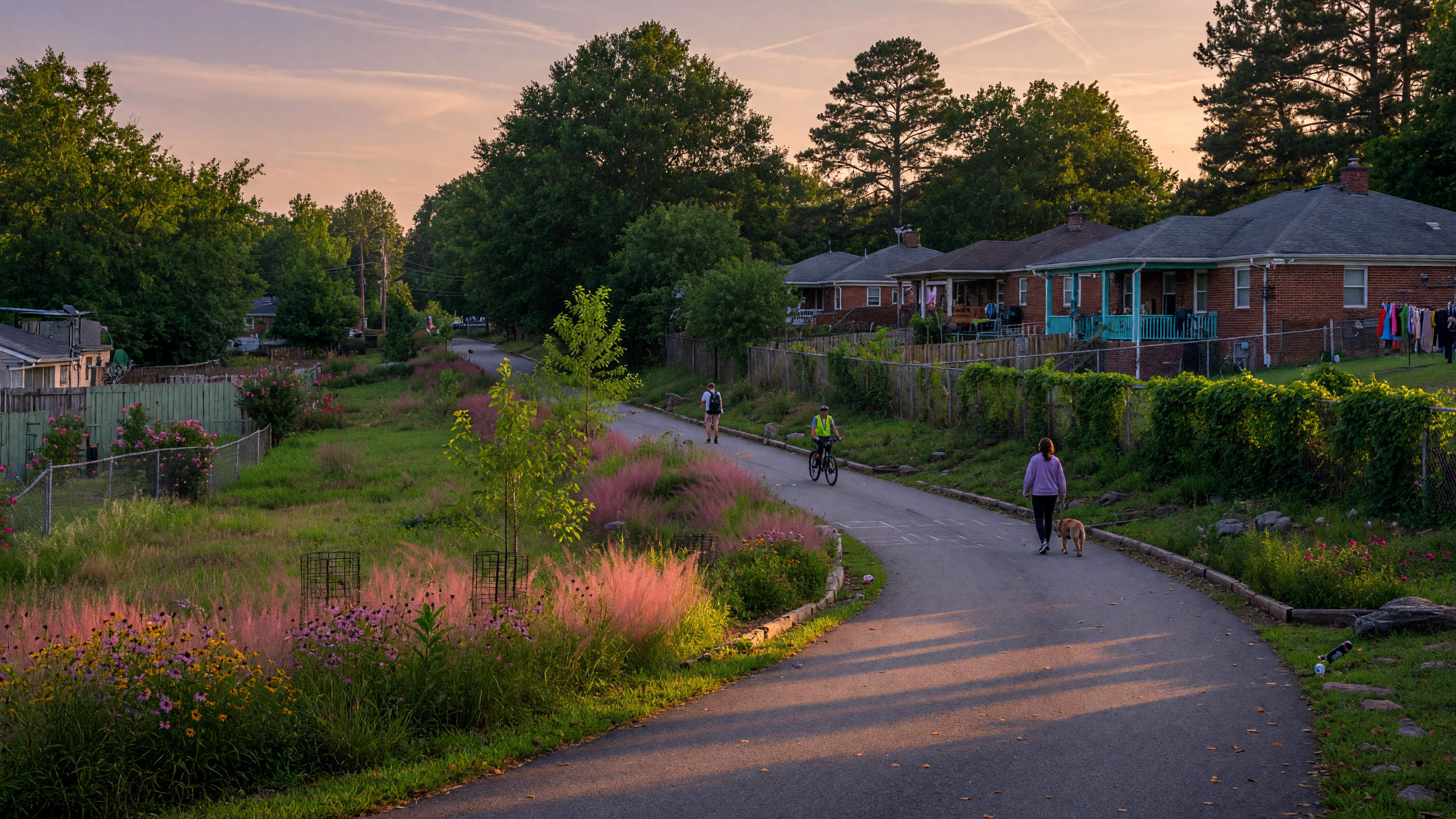
Westview's real estate market is one of the most compelling on Atlanta's west side. It's a neighborhood where you can find a beautifully restored Craftsman bungalow, a dramatic Tudor Revival, a spacious American Foursquare, and a practical mid-century Ranch — often on the same block. The BeltLine's Westside Trail access, the Ralph David Abernathy streetscape improvements, and the broader revitalization of the west side have brought new attention to a neighborhood that has always offered architectural character at prices that make intown ownership possible.
If you're considering buying or renting in Westview, here's what you need to know about the homes, the market, and what it actually takes to live here.
Housing Styles: What You'll Find
Westview's housing stock is remarkably varied — more so than most Atlanta neighborhoods of similar size. The area has been continuously developed since the early 1900s, and the result is a mix of architectural styles that reflect different eras of American residential design.
Craftsman Bungalows
The most prevalent style in Westview, Craftsman bungalows were built primarily between 1910 and 1930. These homes feature wide front porches with tapered columns, exposed rafter tails, low-pitched gabled roofs, and the warm, handcrafted details that define the Arts & Crafts movement. Many Westview bungalows have been updated with modern kitchens and bathrooms while preserving their original character — stone or brick foundations, built-in shelving, and original hardwood floors.
Price range: Renovated Craftsman bungalows typically sell for $275,000–$425,000, depending on size, condition, and location within the neighborhood.
Tudor Revival
Westview's Tudor Revival homes are one of its most distinctive features. Built primarily in the 1920s and 1930s, these homes feature steeply pitched gabled roofs, decorative half-timbering, arched doorways, leaded glass windows, and the romantic English cottage aesthetic that was popular in American suburban development during that era. These homes offer generous square footage, solid construction, and the kind of architectural drama that simply isn't built anymore.
Price range: Tudor Revival homes typically sell for $325,000–$500,000, with fully restored properties at the higher end.
American Foursquares
The American Foursquare — a two-story, boxy, symmetrical design with a center dormer and full-width front porch — is well-represented in Westview. Built primarily between 1900 and 1930, these practical homes offer generous square footage (typically 1,400 to 2,200 square feet) on manageable lots. They're popular with families who value space and simplicity, and many have been updated with modern amenities while preserving their original proportions.
Price range: Renovated American Foursquares typically sell for $280,000–$450,000.
Minimal Traditional and Ranch-Style Homes
Westview includes a layer of mid-century housing — Minimal Traditional homes from the 1930s and 1940s, and Ranch-style homes from the 1950s and 1960s. These smaller, typically single-story homes offer some of the most accessible price points in the neighborhood. They're practical, efficient, and often sit on good-sized lots with mature trees.
Price range: Renovated Minimal Traditional and Ranch-style homes typically sell for $225,000–$350,000.
Market Overview: 2025–2026
Westview's real estate market has been strengthening as the broader west side attracts more buyer interest. The BeltLine's Westside Trail access, the Lee + White development, and the general trend of buyers looking for value in intown neighborhoods have all contributed to rising demand.
Here are the key numbers:
Median sale price: Approximately $415,000–$465,000 across all home types, with significant variation by size, condition, and architectural style. Neighborhood-specific sold data through fall 2026 puts the median near $460,000, up roughly 15% year over year, and rising demand along the BeltLine corridor has been pushing the top of the range upward.
Price per square foot: Roughly $240–$280, depending on the property.
Price range: From approximately $250,000 for smaller Ranch-style homes and Minimal Traditionals to over $550,000 for fully restored Tudor Revivals and premium Craftsman bungalows.
Rental rates: Average rents range from approximately $1,100–$1,500/month, with variation by unit type, condition, and location within the neighborhood.
Days on market: Well-priced homes near the BeltLine or on desirable residential streets tend to sell within two to four weeks. Properties that are priced appropriately for their condition generally move faster than the Atlanta average.
Walk Score: Approximately 50 out of 100, making Westview a car-dependent neighborhood that is nonetheless walkable along its main corridors and to the BeltLine access points.
What Buyers Should Know
Buying in Westview requires some awareness of the neighborhood's unique characteristics:
Homes Are Historic — And That Matters
Most Westview homes are 70 to 110 years old. That means character — but also potential issues. Before buying, get a thorough inspection. Pay attention to the roof, plumbing, electrical, foundation, and any signs of moisture. Ask about the age and condition of major systems. Many homes have been renovated, but the quality of renovations varies significantly.
Neighborhood Designation and Preservation
The Westview Neighborhood Commercial District (NC-15) provides some protections for the commercial corridor along Ralph David Abernathy Boulevard. The broader neighborhood has not yet secured a comprehensive National Register listing, though community organizations have pursued historic designation efforts. If you plan to make significant exterior modifications, it's worth understanding the current regulatory landscape.
Location Within the Neighborhood Matters
Westview is not a uniform neighborhood. The areas closest to the BeltLine Westside Trail and the Ralph David Abernathy Boulevard access point tend to command higher prices and attract more buyer interest. The residential blocks further from the trail tend to be quieter and more affordable. And the areas adjacent to Westview Cemetery offer a sense of openness and green space that's distinct from the rest of the neighborhood.
Think about what matters to you — trail access, quiet streets, proximity to the commercial corridor — and let that guide your search within the neighborhood.
New Development Is Coming
The west side is one of Atlanta's most active development corridors, and Westview is beginning to see new residential construction near the BeltLine and along major corridors. New townhomes and single-family homes offer modern systems and contemporary design — but at higher price points and without the historic character that draws many buyers to Westview in the first place.
What Renters Should Know
Renting in Westview is an option, though the rental market is smaller and less visible than in more densely developed neighborhoods. The area offers a mix of older rental houses, converted duplexes, and apartments in smaller buildings. Average rents are lower than comparable intown neighborhoods on the east side, which makes Westview attractive for renters who want intown living without the premium.
The BeltLine corridor and the areas closer to West End tend to have more rental options, including newer apartment complexes. Within Westview proper, rentals tend to be in traditional houses and smaller buildings — which means a different experience than the big-box apartment complexes in Midtown or Old Fourth Ward.
Westview vs. Neighboring Areas
How does Westview compare to the neighborhoods around it?
West End (to the east) offers similar housing stock and a more established commercial scene, with Lee + White, Wild Heaven Beer, and the AUC campus. West End has higher visibility and slightly higher price points, making it a good comparison for buyers considering Westview.
Ashview Heights (to the northeast) is a smaller, quieter neighborhood with Craftsman bungalows and shotgun houses at accessible price points. Ashview Heights shares many of Westview's characteristics and its proximity to the AUC and the BeltLine.
Grant Park (to the east) is a more established intown neighborhood with larger Victorian and Craftsman homes, higher price points, and the Atlanta Zoo. Grant Park offers more dining and commercial options, but at a significant premium over Westview.
West End vs. Westview: These two neighborhoods share a border and many characteristics, but West End has more commercial activity, a more established dining scene, and slightly higher price points. Westview offers quieter residential streets and often better value for comparable homes.
For buyers who want historic architecture, genuine community, and BeltLine access at a price point that makes intown ownership possible, Westview is one of the best values in Atlanta — and its trajectory suggests that current prices may not last.
Tips for Buying or Renting in Westview
Work with a local agent. Westview is a neighborhood where local knowledge matters. An agent who knows the area — who understands the different sub-areas, the market dynamics, and the community organizations — is invaluable.
Visit the neighborhood at different times. Westview has a different feel on a weekday morning versus a weekend afternoon. Visit both to get a complete picture.
Get a thorough inspection. Historic homes need careful evaluation. Don't skip this step, no matter how charming the house looks.
Think about your lifestyle. Westview works best for people who value history, community, and affordability over polished amenities and walkable commercial corridors. If that's you, the neighborhood will feel like home.
Explore the BeltLine. Walk or bike the Westside Trail from the Ralph David Abernathy access point to understand the neighborhood's connectivity, its relationship to Westside Park, and the development happening along the corridor.
Act when you find the right place. Westview's market is moving. Well-priced homes, particularly near the BeltLine or on prime residential streets, don't sit on the market long. If you find a property that fits your needs, be ready to move.
About the Author

Tommy Williams
Tom Will Sell Atlanta · Intown Atlanta Expert
Tommy has deep knowledge of Westview's housing market, from Craftsman bungalows to Tudor Revivals. He can help you navigate the neighborhood's unique dynamics and find the right property — whether you're buying, selling, or just exploring your options.