Inman Park is the kind of neighborhood that stops people in their tracks. One look at the towering Victorian mansions along Euclid Avenue or the charming Craftsman bungalows on the side streets, and you understand why Atlanta's first planned suburb remains one of the city's most desirable places to live — more than 130 years after it was founded.
But Inman Park isn't just about beautiful architecture. It's a neighborhood with real personality — a place where you can walk to the BeltLine from your front porch, spend a Saturday afternoon at Freedom Park, grab handmade pasta at Fritti, and end the evening at one of Atlanta's best cocktail bars, all without getting in a car.
What Is Inman Park?
Inman Park is a historic intown Atlanta neighborhood located east of Downtown, bordered roughly by Freedom Parkway to the north, DeKalb Avenue to the south, the BeltLine Eastside Trail to the west, and Moreland Avenue to the east. It sits in the 30307 zip code and borders neighboring communities like Lake Claire, Candler Park, and Poncey-Highland.
The neighborhood is best known for three things: its extraordinary collection of Victorian and early 20th-century homes, its direct access to the Atlanta BeltLine, and a dining scene — particularly along North Highland Avenue — that rivals neighborhoods many times its size.
Quick Facts
History: Atlanta's First Planned Suburb
Inman Park was the vision of Joel Hurt, a civil engineer and developer who wanted to create Atlanta's first streetcar suburb. Founded in the early 1890s, the neighborhood was designed around the Inman Park streetcar line, which ran along what is now DeKalb Avenue, connecting residents to Downtown Atlanta in under 15 minutes.
Hurt recruited leading architects of the day to design homes in an eclectic mix of styles — Queen Anne, Romanesque Revival, Neoclassical, and Arts & Crafts. The result was a neighborhood that felt like a self-contained world, with tree-lined streets, generous setbacks, and homes that ranged from modest bungalows to grand mansions.
The neighborhood was named for Samuel Inman, a prominent Atlanta businessman and cotton merchant who was an early investor in the development. At its peak, Inman Park was one of Atlanta's wealthiest addresses — a place where the city's elite built their homes within walking distance of streetcar access and green space.
The Architecture: Victorian Mansions & Craftsman Bungalows
The single most striking thing about Inman Park is its architecture. The neighborhood contains one of the largest concentrations of Victorian-era homes in the Southeast, and walking its streets feels like stepping through an architectural museum.
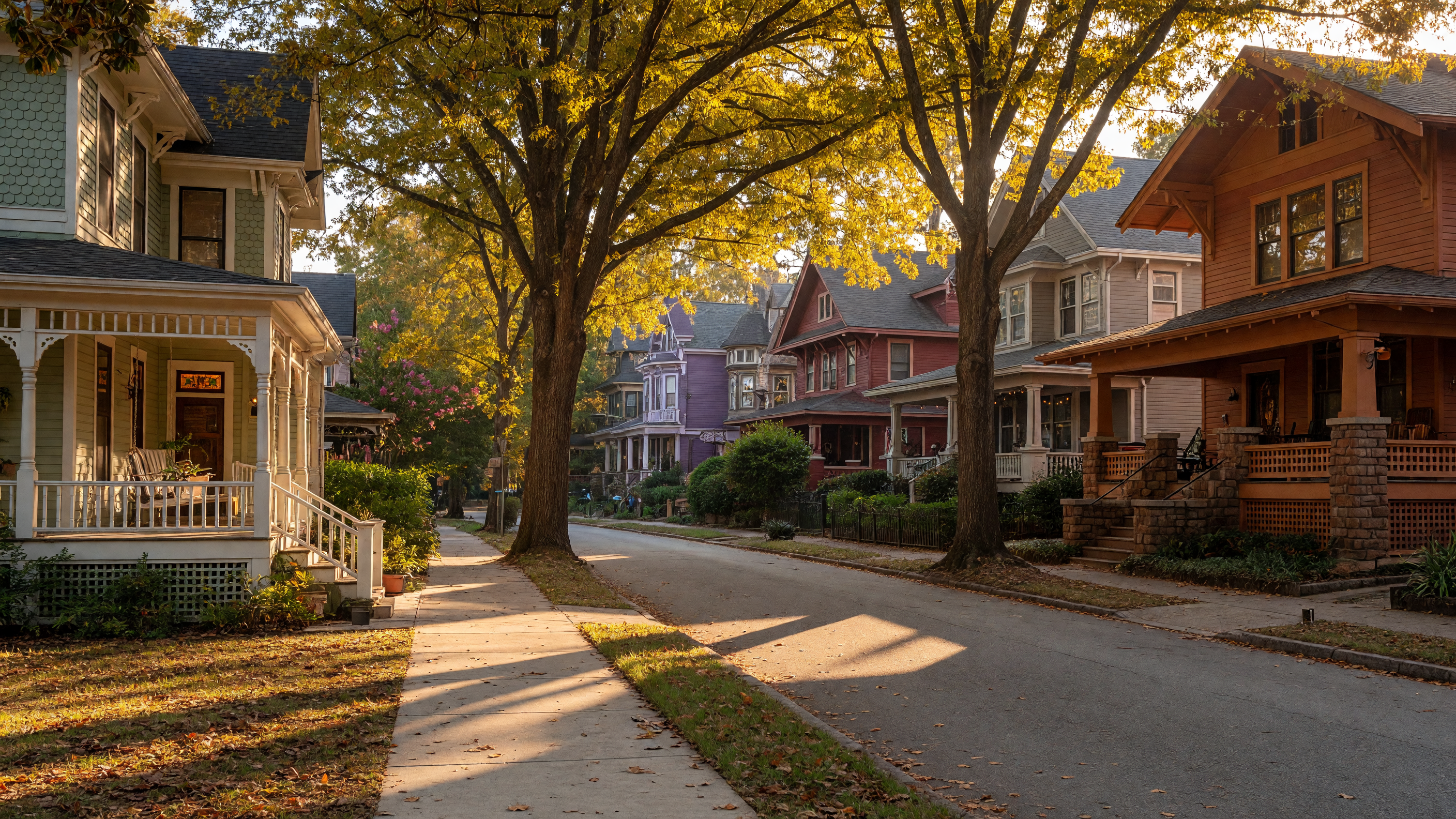
Victorian mansions dominate the main corridors, particularly along Euclid Avenue, Cleburne Avenue, and the streets near Freedom Park. These homes feature the hallmarks of Queen Anne and Romanesque Revival design — turrets, wraparound porches, ornamental trim, stained glass transoms, and steeply pitched roofs. Many have been meticulously restored to their original glory.
Craftsman and Arts & Crafts bungalows fill in the residential blocks between the grander homes. Built in the early 1900s, these houses are characterized by their low-pitched roofs, wide front porches with tapered columns, exposed rafter tails, and built-in cabinetry. They're smaller than the Victorian homes but often more livable for modern families — open floor plans, natural wood details, and a warmth that makes them deeply appealing.
In recent decades, new construction has added to the mix — modern townhomes and custom homes that range from infill single-family houses to sleek contemporary designs. The best new construction respects the neighborhood's scale and character, though opinions vary on the more aggressive developments.
BeltLine Access: The Eastside Trail Connection
Inman Park is one of the best-positioned neighborhoods along the Atlanta BeltLine's Eastside Trail. The trail runs along the neighborhood's western edge, and residents can access it from multiple points — including the popular entrances near DeKalb Avenue and the connection at Freedom Park.
This BeltLine access is a major quality-of-life factor. Residents can walk, jog, or bike directly onto the trail and head north to Ponce City Market and the Atlanta BeltLine trail system, or south toward Grant Park and the Southside Trail. The connection to Ponce City Market — roughly a 10-minute walk or a 3-minute bike ride — is one of Inman Park's biggest lifestyle perks.
Freedom Park: Atlanta's Largest Linear Park
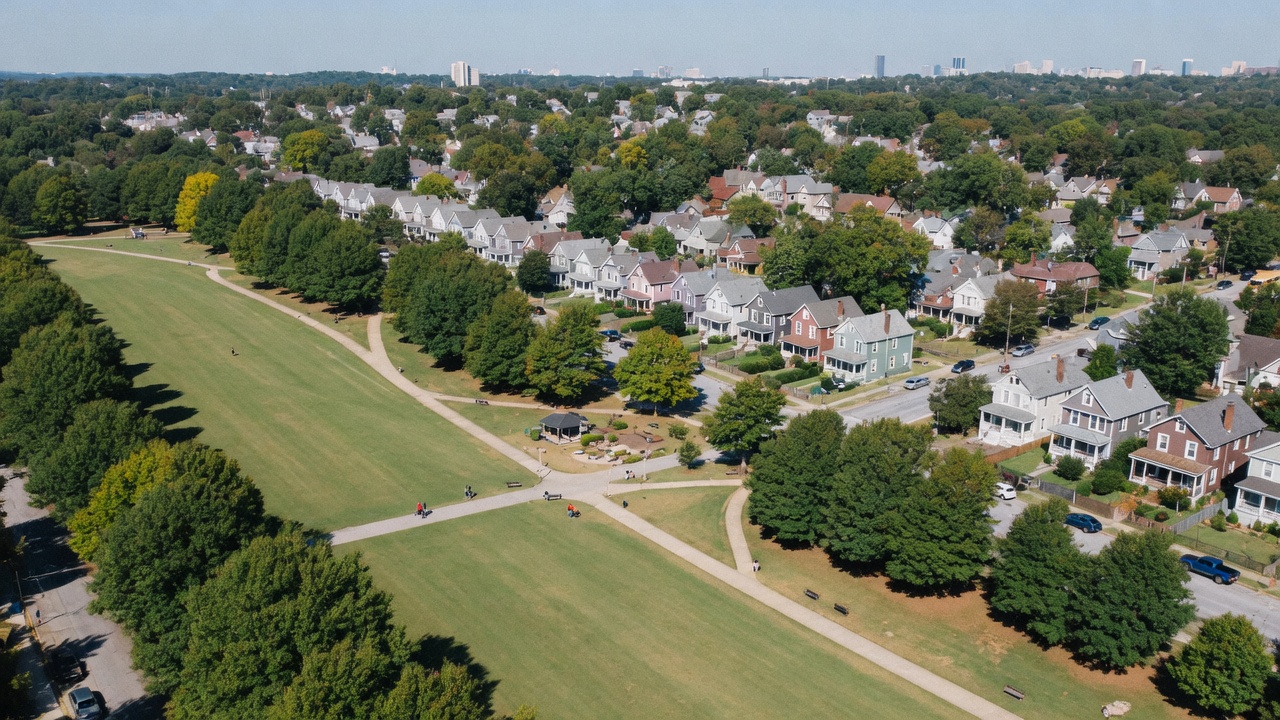
Freedom Park is one of Inman Park's defining features — a 200+ acre greenway that stretches across multiple neighborhoods and serves as the neighborhood's front yard. The park runs along Freedom Parkway and connects Inman Park to the Carter Center, the Martin Luther King Jr. National Historic Site, and several other intown neighborhoods.
The park features miles of paved walking and biking trails, public art installations, open green spaces, and a tree canopy that makes it feel genuinely wild despite its central location. It's the kind of park where you might see someone doing yoga at sunrise, a family having a picnic at noon, and a dog walker enjoying the trails at sunset.
The Inman Park Festival & Tour of Homes
Every spring, Inman Park hosts its signature event — the Inman Park Festival and Tour of Homes. The festival, which has been running since the 1970s, is a volunteer-led celebration of the neighborhood's history, architecture, and community spirit.
The Tour of Homes gives visitors the rare chance to step inside some of Inman Park's most beautiful private residences — restored Victorians, renovated Craftsman bungalows, and thoughtful new construction. It's one of the best ways to experience the neighborhood's architectural heritage up close.
The festival itself includes a street market with local vendors, live music, food, and a parade through the neighborhood. It draws thousands of visitors and is one of the most beloved annual events in all of Atlanta. For residents, it's a point of deep pride — and for visitors, it's often the moment they fall in love with Inman Park.
Dining & Drinks on Highland Avenue
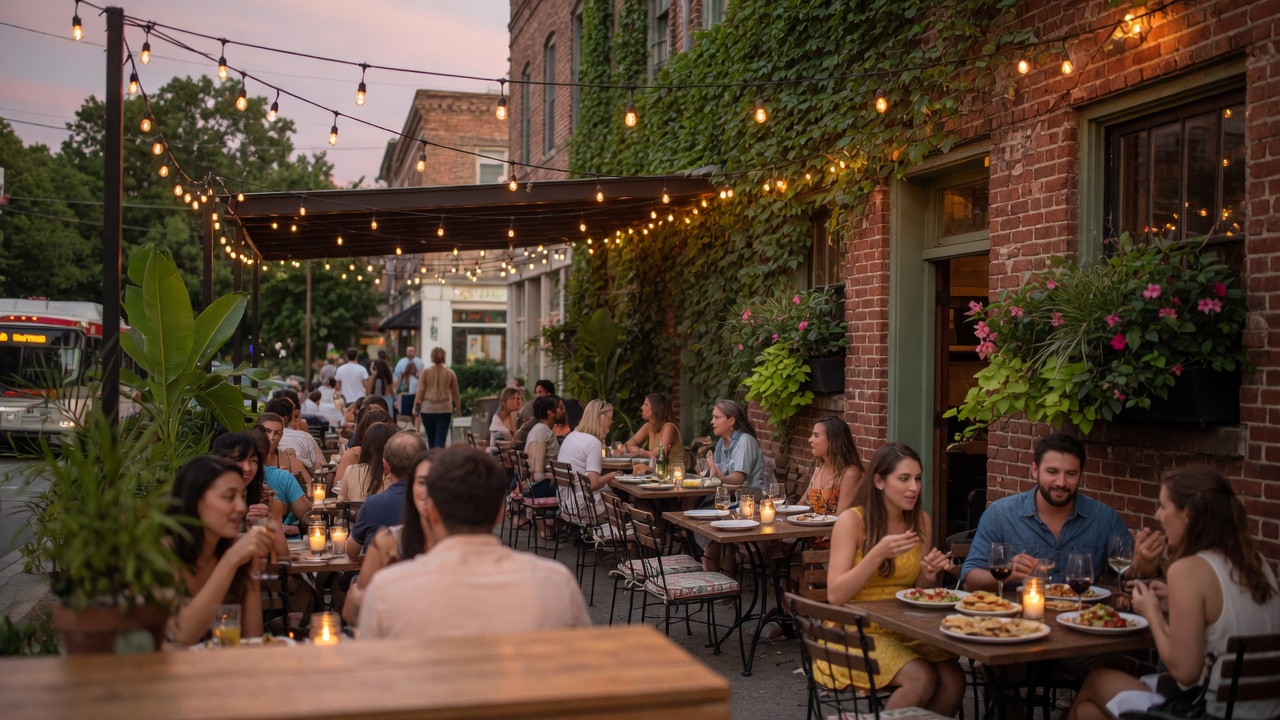
Inman Park's dining scene punches well above its weight. The neighborhood's restaurants are concentrated along North Highland Avenue — one of Atlanta's most vibrant restaurant corridors — and extend onto Elizabeth Street and Edgewood Avenue.
Standouts include Fritti, a beloved Italian spot known for handmade pasta and Neapolitan pizza; Wisteria, a refined Southern restaurant with a cult following; BoccaLupo, an acclaimed pasta bar on Edgewood Avenue; and Bread & Butterfly, a French-inspired café perfect for weekend brunch.
For drinks, North Highland Pub is a neighborhood institution, Barcelona Wine Bar offers an extensive wine list with tapas, and Little Spirit is a cocktail bar that's become a destination in its own right. The stretch around 299 North Highland is a particular hotspot — you can easily bar-hop between three or four spots without leaving the block.
What Makes Inman Park Unique
There are plenty of historic neighborhoods in Atlanta. So what makes Inman Park different?
The combination of factors. You've got extraordinary historic architecture, direct BeltLine access, a world-class park in Freedom Park, a serious dining corridor, and a genuine sense of community — all in a compact, walkable footprint. There are very few places in Atlanta where you get all of that in one neighborhood.
The residents. Inman Park has a strong neighborhood association and a community that genuinely cares about preserving what makes the area special. The annual Festival of Homes, the neighborhood cleanup days, the active civic life — these aren't just amenities, they're evidence of a community that invests in itself.
The scale. Inman Park is small enough to feel intimate — you'll recognize faces at the coffee shop and the grocery store — but connected enough that you're never more than a short walk or bike ride from whatever you need. It's a neighborhood that rewards slowing down and paying attention.
What's New in and Around Inman Park
Inman Park itself holds steady, but the neighborhoods around it keep moving. On Edgewood Avenue in Old Fourth Ward, Joystick Gamebar closed in July 2026 after 14 years and is relocating to East Atlanta Village, while The Roux Kitchen, a New Orleans-style kitchen, has opened on the corridor. The BeltLine Eastside Trail remains the neighborhood's best amenity, and with the Southeast Trail now open, the full loop is one step closer.
Tips for Getting to Know Inman Park
If you're considering a visit or a move, here's how to get the most out of Inman Park:
Walk the streets. The best way to experience Inman Park is on foot. Start at the corner of Euclid and Elizabeth, walk south through the residential blocks, and take in the architecture. The homes along Cleburne and Sinclair Avenues are particularly stunning.
Ride the BeltLine in. If you're coming from elsewhere in the city, take the BeltLine to the Inman Park entrance and walk into the neighborhood from there. You'll get a sense of how the trail connects Inman Park to the rest of Atlanta.
Eat on Highland. Plan a dinner at Wisteria or Fritti, grab coffee at Inman Perk or Bread & Butterfly, and finish with a cocktail at Little Spirit or Barcelona Wine Bar. Inman Park's dining corridor rewards repeat visits.
Visit Freedom Park. Walk or bike through Freedom Park to get a sense of the neighborhood's green space. The trails connect to the BeltLine, the Carter Center, and several other neighborhoods — it's the ultimate starting point for exploring intown Atlanta.
Time your visit for the festival. If you can, plan a visit during the Inman Park Festival in the spring. It's the best way to experience the neighborhood's community spirit and see inside some of its most beautiful homes.
Is Inman Park Right for You?
Inman Park works best for people who value character and walkability over newness and space. If you want a cookie-cutter subdivision with a two-car garage, this probably isn't your neighborhood. But if you want to live in a place with genuine history, beautiful architecture, a real community, and access to some of Atlanta's best dining and outdoor spaces — Inman Park is hard to beat.
The housing stock ranges from grand Victorian mansions (typically $1M+) to charming Craftsman bungalows ($550K–$900K) to modern townhomes and condos ($400K–$700K). There's real variety here, though inventory is always tight — homes in Inman Park don't stay on the market long.
For more detail on housing styles, pricing, and the real estate market, check out our Inman Park Real Estate guide. And for a deeper dive into the neighborhood's history, read our Inman Park history post.
About the Author

Tommy Williams
Tom Will Sell Atlanta · Intown Atlanta Expert
Tommy knows Inman Park block by block — from the Victorian mansions on Euclid to the bungalows near the BeltLine. When he's not helping clients find their perfect home, he's exploring the neighborhood's newest restaurants and hidden gems.