
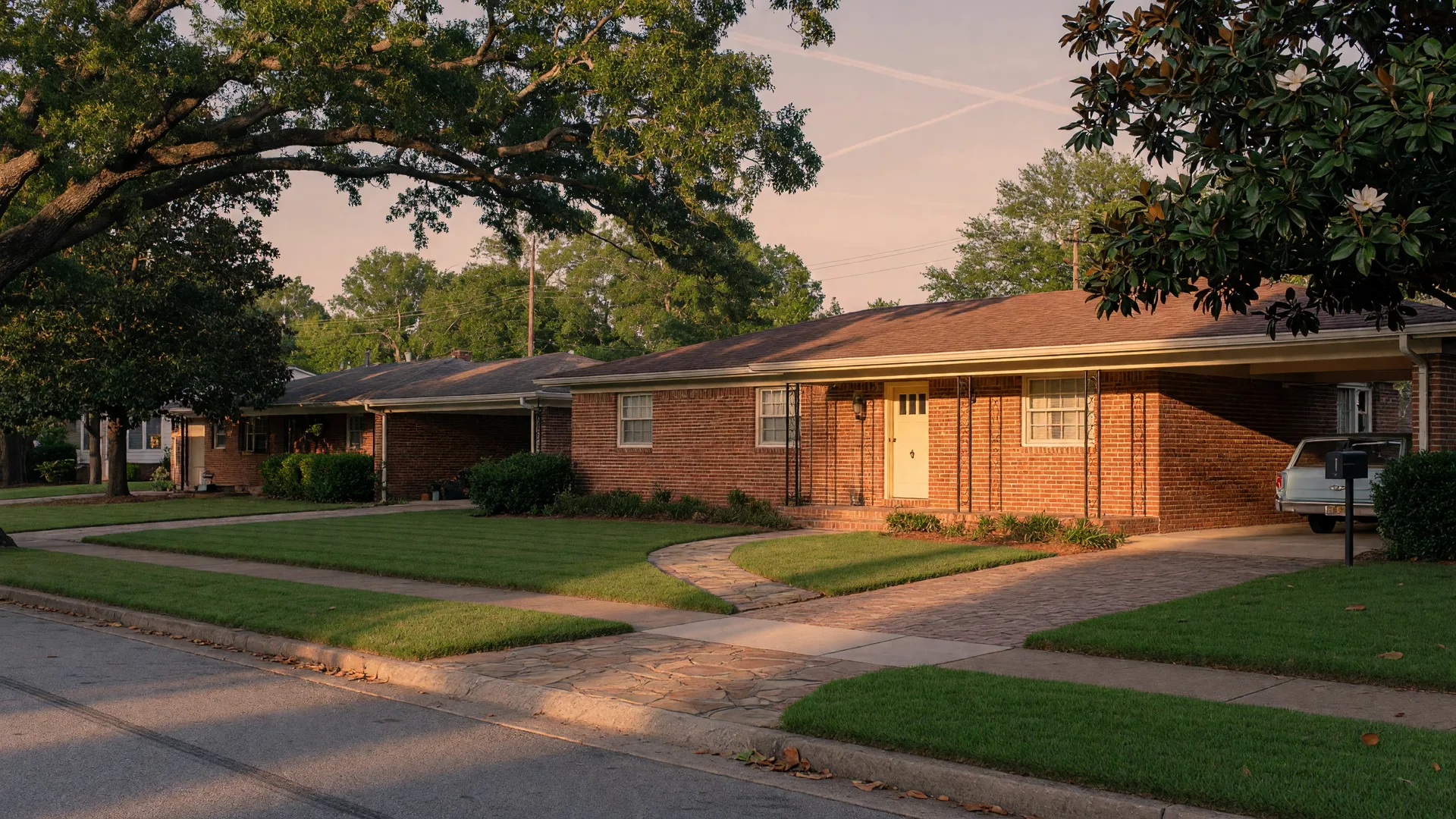
Moving out of a home you own in Atlanta does not force a sale. Keeping it as a rental is a legitimate and often the more profitable choice, but it only makes sense when the cash flow math, the tax situation, and your tolerance for being a landlord all line up. This framework walks the keep-and-rent decision with realistic intown numbers, so you can decide with your calculator instead of your gut.
The Two Questions That Decide Everything
Question one: does the property cash flow as a rental? Question two: do you want the job? A property can be an objectively good rental and still be the wrong choice for you personally; both answers have to be yes. The math in this post settles question one. Question two is on you, but the management section below lays out the realistic version of the job.
Three Intown Scenarios, Modeled
These are modeled examples with stated assumptions, not specific properties. Run your own numbers on the rental analysis page with current rents and your actual mortgage.
| Scenario | Property | Market rent | Read |
|---|---|---|---|
| BeltLine-adjacent 3BR | East Atlanta / Reynoldstown | $2,100–$2,600/mo | Likely cash flows after expenses |
| Established 3BR | Grant Park / Inman Park | $2,100–$2,600/mo | Strong equity, thinner cash flow to price |
| Emerging corridor 3BR | West End / East Point | $1,700–$2,200/mo | Best cash-on-cash, lower immediate value |
Take a concrete example. An owner bought an intown 3BR for $280,000 several years ago, owes about $200,000, and the property is now worth roughly $420,000. Rented at $2,300 a month, gross annual rent is $27,600. After vacancy, repairs, insurance, and property tax, net operating income might run $18,000 to $20,000. Against monthly debt service near $1,300 at today's rates, the property roughly breaks even to slightly negative on cash flow before principal paydown, which is fine: the tenant is paying down your mortgage and the appreciation is compounding.
Now the other side. Selling at $420,000 nets maybe $390,000 after agent commission and closing costs, and after paying off the $200,000 loan, roughly $190,000 lands in your pocket, less taxes if the gain exceeds your exclusion. That $190,000 invested at a conservative 4% to 5% yields $7,600 to $9,500 a year with zero work and zero risk of a roof leak. The rental beats that only when you count principal paydown, appreciation, and tax benefits, which over a 5 to 10 year hold usually adds up to far more than the passive yield. The question is whether you want the work.
The Tax Side of Keeping It
Keeping the property as a rental brings depreciation, which shelters a big share of the rental income on paper, and keeps the door open to a 1031 exchange when you eventually sell. Two cautions: the primary-residence capital gains exclusion (up to $250K for singles, $500K for couples) requires two years of residence in the five years before sale, so if you rent too long, you lose it for that property, though partial relief can apply. And when you do sell a rental, depreciation you claimed is recaptured at up to 25%. A clean version: if you might want the exclusion, sell within three years of moving out; if not, rent and let depreciation work.
Management, the Real Job
Self-management of one property runs maybe 10 to 15 hours a month across tenant placement, maintenance coordination, and bookkeeping. Professional management runs 8% to 10% of collected rent and can push a marginal deal negative, which is exactly why the underwriting above must include either your time or that fee. Georgia's current rules are landlord-friendly but real: the Safe at Home Act caps security deposits at two months' rent, and if you live out of state, House Bill 399 requires a Georgia-licensed broker or property manager as your local contact. Intown Atlanta tenants are mostly professionals and students who pay reliably, and the 3 to 5% vacancy typical for well-priced intown rentals keeps turnover manageable.
The Bottom Line
Keep-and-rent wins when the property is in a corridor with rising rents, you can live with the management, and you hold long enough for principal paydown and appreciation to show up. Sell wins when you need the equity, the property would only cash flow thin, or you simply do not want the job. Run both sides on paper before you decide, and if the numbers are close, the tiebreaker is usually the exit: a rental can always be sold later, but the exclusion window does not wait forever. The full neighborhood-by-neighborhood rent and value data is on the investing hub.
Quick Answers
How long should I rent my home before selling it?
Is renting or selling better in 2026 Atlanta?
What costs should I count in keep-and-rent math?
I'll run the keep-and-rent numbers on your actual property, including the tax side and realistic rents, and give you a straight recommendation.
I'll be in touch.
About the Author

Tommy Williams
Tom Will Sell Atlanta · Intown Atlanta Real Estate Expert
With over 20 years of experience and over 500 homes sold across Metro Atlanta, Tommy has helped owners decide when to keep, when to sell, and how to structure either outcome cleanly. Get in touch for an honest look at your property's numbers.